

A tax system is important because of what it can pay for, but also for how it works. When we pay taxes, we expect something back from the state; it strengthens the relationship and accountability between us and our governments. It also pays for what private finance shouldn't: our needs for healthcare, education and social security.
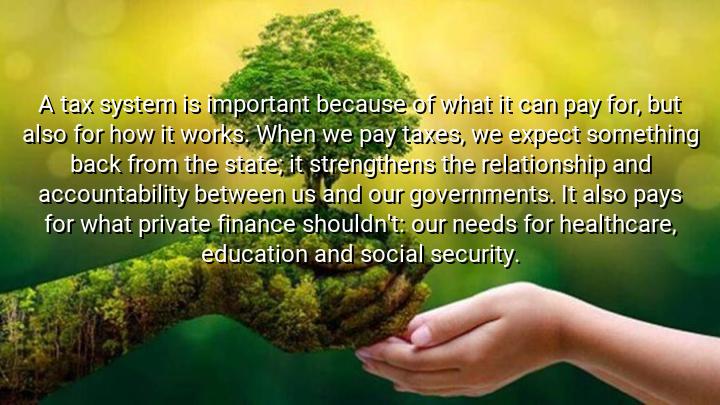




The quote by Winnie Byanyima, “A tax system is important because of what it can pay for, but also for how it works. When we pay taxes, we expect something back from the state; it strengthens the relationship and accountability between us and our governments. It also pays for what private finance shouldn’t: our needs for healthcare, education and social security”, underscores the dual role of taxation in society. Byanyima stresses that a fair and effective tax system not only funds essential public services but also builds trust and accountability between citizens and the state.
The origin of this statement comes from Byanyima’s long career as a Ugandan politician, diplomat, and human rights advocate. As the former Executive Director of Oxfam International and later head of UNAIDS, she has consistently argued for equity in economic and social systems. Her advocacy around tax justice highlights how properly structured tax systems are vital in reducing inequality, strengthening democracy, and ensuring that all citizens have access to healthcare, education, and social security.
By pointing out that taxes fund what “private finance shouldn’t,” Byanyima draws a clear line between public goods and private interests. She argues that essential services like healthcare and education should not be left solely to markets, as doing so would exclude the vulnerable. Instead, the state has a responsibility to guarantee these rights through collective contributions, ensuring fairness and inclusivity in society.
Ultimately, Byanyima’s quote reflects her vision of a just economic order where taxation is not seen as a burden but as a shared investment in the common good. For her, a well-functioning tax system is both a practical necessity and a moral imperative, strengthening the bond between citizens and their governments while securing fundamental social protections for all.

AAdministratorAdministrator
Welcome, honored guests. Please leave a comment, we will respond soon