

A religion without mystery must be a religion without God.
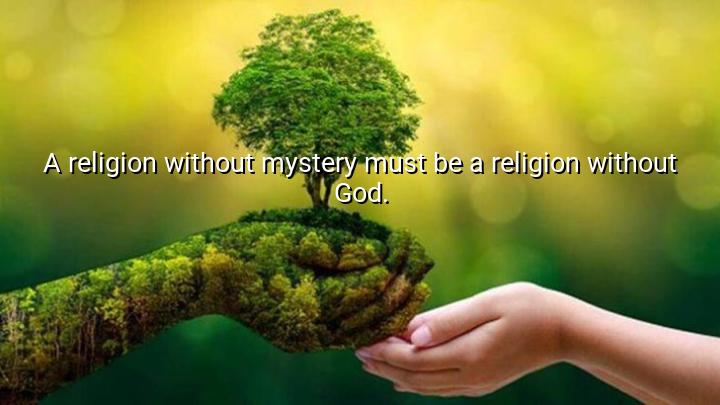




In this quote, Jeremy Taylor suggests that the mystery inherent in religion is essential for maintaining a genuine connection to the divine. By saying, "A religion without mystery must be a religion without God," Taylor emphasizes that faith and spirituality require an element of the unknown or unknowable. Religion, in his view, is not just about clear answers or rational understanding, but also about engaging with the mysteries of existence, divinity, and the human soul. Without this element of mystery, religion would lose its sense of awe, wonder, and transcendence, which are central to experiencing the divine.
The idea that mystery is integral to a true religious experience aligns with many theological and philosophical traditions, which suggest that God or the divine is beyond complete human comprehension. In this context, mystery serves as a reminder of the limits of human knowledge and the need for humility in the face of something greater than ourselves. For Taylor, the absence of mystery would reduce religion to a mere system of rules or doctrines, stripping it of its deeper spiritual meaning and its ability to inspire true faith and reverence.
Taylor’s quote also speaks to the role of paradox in religion. Many religious traditions rely on seemingly contradictory ideas—such as a God who is both imminent and transcendent, or a divine being who is both all-powerful and humble—and these paradoxes often evoke a sense of mystery. By emphasizing mystery, Taylor suggests that religion should foster a sense of wonder and contemplation, inviting individuals to explore the divine in a way that transcends simple understanding.
The origin of this quote comes from Jeremy Taylor, a 17th-century English theologian and clergyman, known for his writings on spiritual life and religious practice. Taylor was deeply concerned with the nature of faith and the human relationship to God, and his works often explore the complex and mysterious aspects of religion. This quote reflects his belief in the essential role that mystery plays in preserving the authenticity and depth of religious experience, suggesting that any religion stripped of its mysteries would ultimately fail to connect its followers with the divine.

AAdministratorAdministrator
Welcome, honored guests. Please leave a comment, we will respond soon