

A propensity to hope and joy is real riches; one to fear and sorrow real poverty.
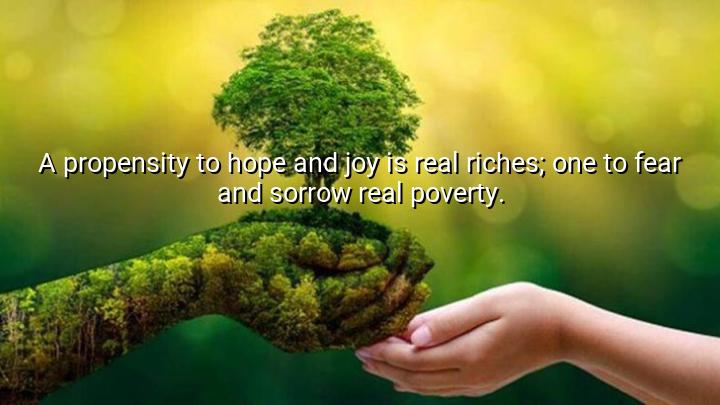




The quote "A propensity to hope and joy is real riches; one to fear and sorrow real poverty" by David Hume conveys the idea that the emotional and mental states of hope and joy are true sources of wealth, while fear and sorrow can be seen as a form of poverty. Hume suggests that a person who is inclined to feel hope and joy, regardless of material circumstances, is truly wealthy in spirit. In contrast, those who are dominated by fear and sorrow, even if they possess material wealth, are impoverished because they lack inner peace and happiness.
The origin of this quote is tied to Hume’s philosophical and empirical views on human nature. As a Scottish philosopher, Hume explored the role of emotions and psychological states in shaping the human experience. He argued that true happiness comes from the mind’s capacity to find hope and joy, not from external possessions or situations. His reflections often focused on how our perceptions and mental states define the quality of our lives, rather than just the material conditions in which we live.
Hume’s words also highlight the power of mindset. The quote implies that one's emotional outlook on life determines whether a person is rich or poor, regardless of their financial situation. Hope and joy enrich the human experience by fostering a positive and fulfilling life, while fear and sorrow diminish it, creating a sense of poverty that goes beyond material loss.
In essence, Hume is emphasizing the importance of cultivating a positive emotional state to live a rich and fulfilling life. The quote serves as a reminder that mental resilience and emotional well-being are the true sources of wealth, and the ability to find joy and hope, despite life's challenges, is what makes one truly prosperous.

AAdministratorAdministrator
Welcome, honored guests. Please leave a comment, we will respond soon