

You will know that forgiveness has begun when you recall those who hurt you and feel the power to wish them well.
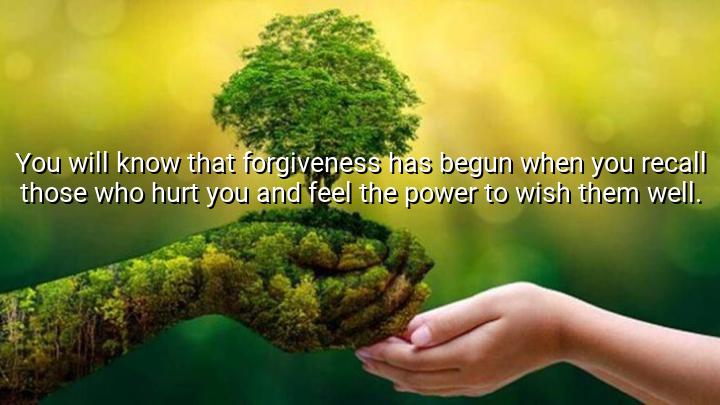




In this quote, Lewis B. Smedes explains that forgiveness is a transformative process that begins when a person can recall those who have hurt them and no longer feel anger or resentment. Instead, they feel the power to wish those individuals well, even though they may have wronged them in the past. Smedes suggests that true forgiveness is not about forgetting the offense but about releasing the emotional grip of negative feelings, allowing space for compassion and empathy instead.
Smedes’ perspective highlights that forgiveness is an emotional journey and not an instant act. It takes time for individuals to move from the pain of being wronged to a place of healing, where they can genuinely wish the best for those who have caused them harm. This shift in feelings reflects a deep inner change, where the focus moves from holding grudges to finding peace and emotional freedom. In this sense, forgiveness frees both the forgiver and the forgiven, releasing both parties from the burden of past wrongs.
The origin of this quote lies in Lewis B. Smedes' work as a theologian, ethicist, and author, particularly in his writing on the nature of forgiveness and reconciliation. In books like The Art of Forgiving, Smedes explored how forgiveness is vital for emotional well-being and the restoration of relationships. He recognized that forgiveness is an ongoing process, not a simple or one-time event, and that it can be a path toward healing and personal growth.
Ultimately, Smedes’ quote offers a profound insight into the nature of forgiveness. It shows that true forgiveness involves not just the absence of anger but the presence of goodwill and the willingness to release negative emotions. By learning to wish well for those who have wronged us, we can find the peace and freedom necessary to move forward with our lives without being weighed down by the past.

AAdministratorAdministrator
Welcome, honored guests. Please leave a comment, we will respond soon