

You know, those of us who leave our homes in the morning and expect to find them there when we go back - it's hard for us to understand what the experience of a refugee might be like.
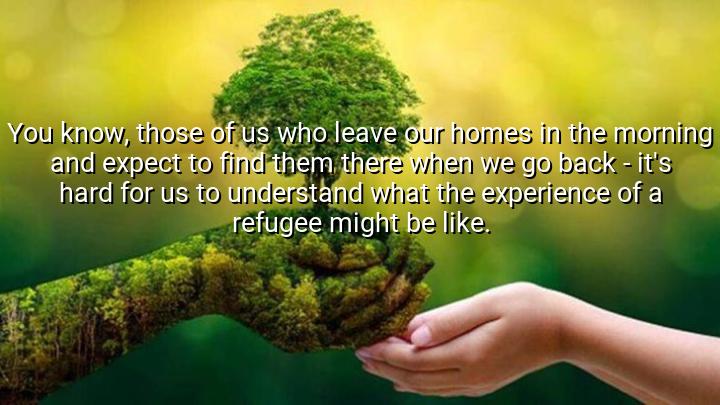




In the quote by Naomi Shihab Nye, "You know, those of us who leave our homes in the morning and expect to find them there when we go back - it's hard for us to understand what the experience of a refugee might be like," Nye reflects on the privilege of having a stable home and the comfort of knowing it will be there when we return. She contrasts this with the uncertainty and fear that refugees face—individuals who are often displaced from their homes due to war, conflict, or persecution. Nye emphasizes how difficult it is for those of us with the security of a permanent home to fully comprehend the emotional and physical toll of being a refugee.
The origin of this quote stems from Nye's work as a poet and author, where she has written extensively about themes of identity, displacement, and the human experience. Nye herself has roots in multiple cultures, being of Palestinian and American descent, which may have influenced her understanding of what it means to be caught between different worlds. Her writing often explores the challenges of migration, the emotional weight of displacement, and the human stories behind the term refugee.
Nye’s statement acknowledges the disconnect between those who have never experienced displacement and those who live with its daily reality. It highlights the privilege of having a place to return to, something many people take for granted. By stating that it’s hard to understand the experience of a refugee, she underscores the empathy gap that exists when people cannot relate to the trauma and instability refugees face. This recognition calls for greater awareness and compassion toward those who are forced to leave everything behind in search of safety or a better life.
Ultimately, this quote challenges us to reflect on the fragility of our own sense of security and the resilience required of refugees. Nye's words urge us to consider how we can foster greater understanding and support for those displaced from their homes, offering a more compassionate perspective on the struggles faced by refugees around the world.

AAdministratorAdministrator
Welcome, honored guests. Please leave a comment, we will respond soon