

You don't have to live in the country and grow your own food to be green.
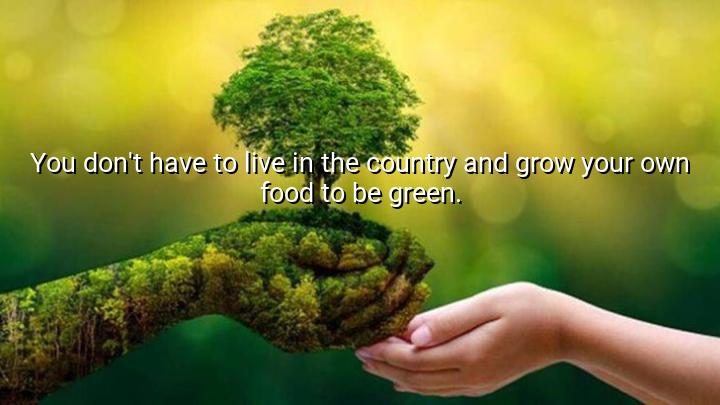




The quote "You don't have to live in the country and grow your own food to be green" by Shalom Harlow challenges common assumptions about what it means to live an eco-conscious or sustainable lifestyle. As a Canadian model and environmental advocate, Harlow uses this statement to emphasize that environmental responsibility is not limited to rural or agricultural lifestyles. Instead, she suggests that being "green" is about making thoughtful, everyday choices—regardless of where you live or what your profession may be.
By mentioning "live in the country" and "grow your own food", Harlow refers to a romanticized vision of sustainability that equates environmentalism with self-sufficiency and rural living. While these can be valuable expressions of eco-living, her quote expands the definition to include urban dwellers, apartment tenants, and those with modern lifestyles. This reflects a more inclusive and practical understanding of how people can contribute to the health of the planet.
The heart of the message lies in the belief that sustainable actions can be integrated into daily urban life—through choices like using public transport, reducing waste, supporting ethical brands, and conserving energy. Harlow’s perspective promotes accessibility in environmentalism, encouraging people to adopt eco-friendly habits without feeling pressured to make radical lifestyle changes.
In essence, Harlow’s quote serves as a reassurance and a call to action: you don’t need to overhaul your life to make a difference. By redefining what it means to be green, she empowers individuals from all walks of life to recognize their personal impact and contribute to a more sustainable world—one small decision at a time.

AAdministratorAdministrator
Welcome, honored guests. Please leave a comment, we will respond soon