

Yet, despite our many advances, our environment is still threatened by a range of problems, including global climate change, energy dependence on unsustainable fossil fuels, and loss of biodiversity.
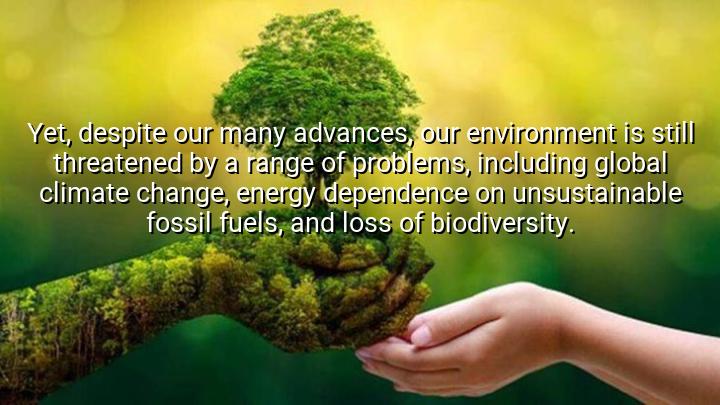




The quote, "Yet, despite our many advances, our environment is still threatened by a range of problems, including global climate change, energy dependence on unsustainable fossil fuels, and loss of biodiversity," by Dan Lipinski, acknowledges that while significant progress has been made in technology, policy, and sustainability efforts, the environment continues to face critical challenges. Lipinski, a U.S. congressman, highlights the pressing environmental problems that still threaten the planet’s health, despite advances in other areas of human development.
Lipinski’s statement focuses on three major issues: global climate change, energy dependence on fossil fuels, and the loss of biodiversity. Climate change is identified as a long-term threat, exacerbated by human activities that increase greenhouse gas emissions. Similarly, the continued reliance on unsustainable fossil fuels for energy contributes to environmental degradation and slows the transition to renewable energy sources. The loss of biodiversity further underscores the fragile state of ecosystems, with the extinction of species leading to disruptions in natural processes that sustain life.
The quote suggests that while advances in technology and economic growth have brought many benefits, they have not solved the deeper environmental challenges we face. Instead, these problems have persisted or even worsened as industrialization and human development continue to place increasing pressure on the natural world. Lipinski's message calls for more robust and comprehensive action to address these global environmental issues.
Ultimately, Lipinski's words highlight the need for greater global cooperation and innovation to tackle the environmental threats that jeopardize the future of our planet. Despite the advances in technology and policies aimed at sustainability, addressing climate change, reducing dependence on fossil fuels, and protecting biodiversity remain crucial steps in ensuring a healthy, thriving world for future generations.

AAdministratorAdministrator
Welcome, honored guests. Please leave a comment, we will respond soon