

Women are living independently, but we don't yet have the social and economic policies behind us to support that independence.
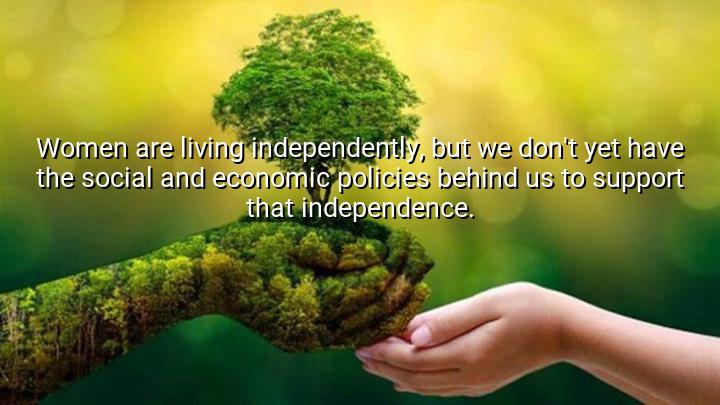




Rebecca Traister’s quote highlights the progress that women have made in achieving independence, particularly in terms of personal and professional autonomy. She acknowledges that many women today are living more independently than ever before, with increased opportunities for education, career advancement, and personal freedom. However, Traister points out that despite these advancements, social and economic policies have not yet fully kept pace to support this independence.
The phrase "we don't yet have the social and economic policies behind us" suggests that while women may have made strides toward equality and self-sufficiency, there are still systemic barriers that hinder their ability to truly live independently. Traister is referencing the need for policy changes that would provide a more supportive environment for women to thrive in both their personal and professional lives. This includes access to affordable healthcare, paid family leave, equal pay, and other social and economic measures that ensure women can maintain their independence without facing financial or social hardships.
Traister’s statement underscores the gap between women’s increasing autonomy and the structural challenges they face in achieving full self-sufficiency. It calls attention to the fact that independence isn’t just about personal choices, but also about having the resources and policies in place to sustain that independence. The lack of supportive policies means that women are often still burdened by additional challenges, such as the gender pay gap and limited access to critical resources like childcare or healthcare.
Ultimately, Traister’s quote reflects the ongoing need for policy reform to match the growing independence of women in society. While women may have made significant gains in areas like education and employment, the lack of adequate social and economic policies remains a key obstacle to true gender equality and the full realization of women’s independence.

AAdministratorAdministrator
Welcome, honored guests. Please leave a comment, we will respond soon