

With sadness specifically, in America you read about people medicating to avoid sadness. They don't want to experience sadness, and yet it's such a vital part of being human.
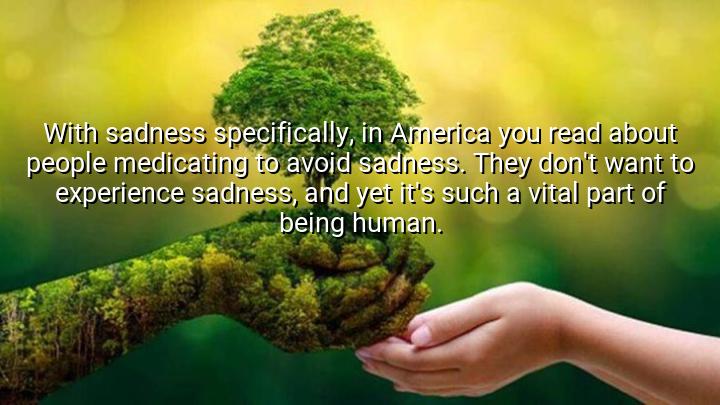




In this quote, Pete Docter reflects on the cultural tendency in America to avoid or medicate feelings of sadness. He points out that many people try to suppress or escape sadness through various means, including medication, rather than confronting it head-on. Docter suggests that this avoidance is problematic, as sadness is not something to be feared or eliminated but rather an essential part of being human. His perspective challenges the modern mindset that prioritizes constant happiness and comfort.
Docter’s statement emphasizes the importance of embracing all emotions, including sadness, as part of the human experience. He argues that experiencing sadness is crucial for personal growth, empathy, and understanding the complexities of life. Rather than viewing sadness as a negative emotion to be avoided, it can be seen as an opportunity for reflection, healing, and self-discovery. Without it, Docter implies, we may miss out on the full range of human emotions that contribute to a rich and meaningful life.
The origin of this view can be traced to Docter's work, especially in films like Inside Out, where the character of Sadness plays a central role in helping the protagonist process her emotions. Through this film, Docter explored the concept that all emotions, even negative ones like sadness, are necessary for emotional balance and well-being. His work emphasizes that it is the acceptance of emotions in their entirety that leads to greater emotional intelligence and maturity.
Ultimately, Docter’s quote serves as a reminder that sadness is not something to be feared or medicated away but an integral part of the human experience. By accepting and processing sadness, we allow ourselves to live fully and understand the depth of our emotions, leading to a more authentic and fulfilling life.

AAdministratorAdministrator
Welcome, honored guests. Please leave a comment, we will respond soon