

When we believe in our thoughts, when we tell ourselves a story, we suffer. 'My husband doesn't respect me.' 'I should be thinner.' Those are stories. When there's no story, there's no suffering.
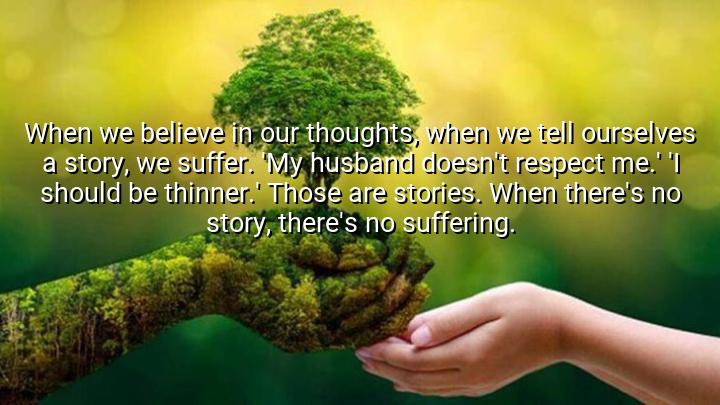




The quote by Byron Katie explores the connection between thoughts, beliefs, and suffering. She suggests that the stories we tell ourselves—like “My husband doesn't respect me” or “I should be thinner”—are the root of our pain. According to Katie, it is not external circumstances themselves that cause suffering, but the interpretation and attachment to these narratives.
Katie emphasizes the idea that when we stop believing these self-created stories, we can experience freedom from emotional distress. The moment there is no story, there is no suffering, because our mind is not projecting judgments or expectations onto reality. This approach encourages self-awareness and challenges habitual thought patterns that lead to unnecessary emotional burden.
The origin of this quote comes from Byron Katie’s work as a spiritual teacher and founder of The Work, a method of self-inquiry. She developed this practice to help people question their thoughts and recognize how their beliefs create emotional pain. Her teachings focus on the transformative power of examining thoughts rather than resisting or blaming external circumstances.
Ultimately, the quote reminds us that suffering is largely a product of the stories we create in our minds. By observing our thoughts without automatically believing them, we can cultivate peace, clarity, and a deeper sense of presence in our lives. Katie’s insight encourages letting go of rigid narratives to experience reality more openly and fully.

AAdministratorAdministrator
Welcome, honored guests. Please leave a comment, we will respond soon