

When the child begins to think and to make use of the written language to express his rudimentary thinking, he is ready for elementary work; and this fitness is a question not of age or other incidental circumstance but of mental maturity.
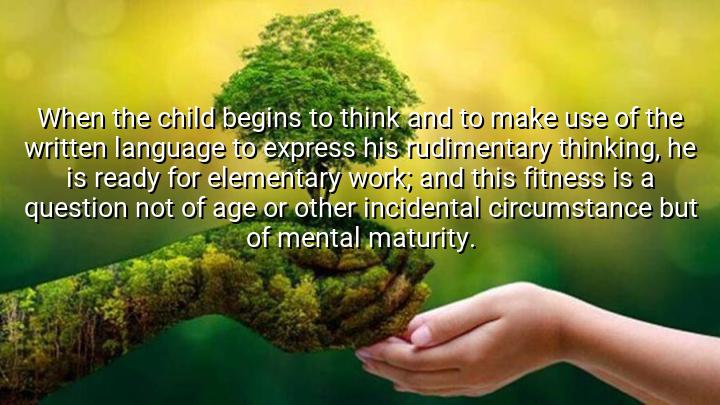




The quote by Maria Montessori emphasizes that a child's readiness for elementary work is not determined by their age or external circumstances but by their mental maturity. She highlights the importance of a child beginning to think independently and use written language to express their early ideas as key signs of readiness. This perspective stresses that true preparedness for learning is rooted in cognitive development rather than arbitrary factors.
Originating from Montessori, an influential educator and pioneer of child-centered education, the quote reflects her philosophy of respecting each child's individual developmental timeline. Montessori believed that education should align with the natural growth of a child's mind, allowing learning to occur when the child is truly ready, not simply because they have reached a certain age.
The quote also challenges traditional views of education that emphasize strict age-based milestones. Instead, Montessori advocates for recognizing the unique mental and emotional stages children pass through, ensuring that educational experiences are meaningful and effective by matching the child’s developmental state.
In summary, the quote captures Maria Montessori’s foundational belief in the importance of mental maturity as the true measure of a child’s readiness for learning. It originates from her educational philosophy and promotes a more personalized, developmentally appropriate approach to education.

AAdministratorAdministrator
Welcome, honored guests. Please leave a comment, we will respond soon