

When I approach a child, he inspires in me two sentiments; tenderness for what he is, and respect for what he may become.
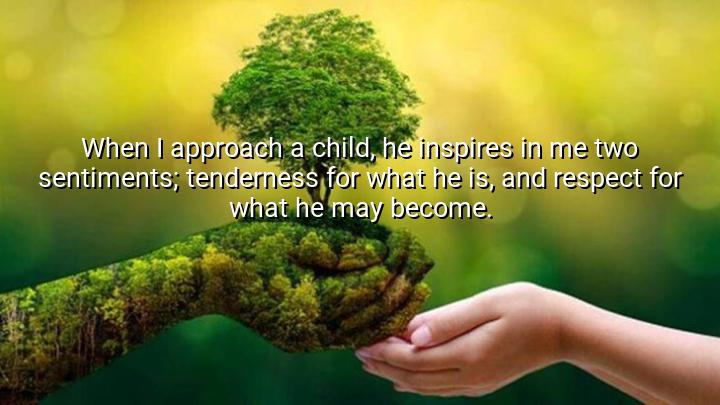




The quote by Louis Pasteur emphasizes the dual feelings of tenderness and respect that arise when observing a child. By saying, “he inspires in me two sentiments; tenderness for what he is, and respect for what he may become,” Pasteur highlights the importance of valuing both the child’s present innocence and potential for future growth. The quote underscores a balance between care for the present and recognition of possibilities for the future.
Pasteur’s words suggest that interacting with children requires both compassion and reverence. Tenderness reflects an empathetic appreciation for the child’s current state—his needs, feelings, and experiences—while respect acknowledges the child’s future capabilities and the responsibilities he will one day assume. This perspective encourages nurturing and guiding young individuals without underestimating their potential.
The origin of this quote comes from Louis Pasteur, the renowned French microbiologist and chemist, who contributed significantly to science and medicine. Beyond his scientific achievements, Pasteur had a deep appreciation for education, human development, and the moral responsibility to foster the growth of the next generation. His reflections reveal a thoughtful understanding of the balance between nurturing and empowering young minds.
Ultimately, the quote serves as a reminder that children should be approached with both care and esteem. By valuing who they are and honoring what they may become, we cultivate an environment where young people can grow confidently, responsibly, and with the support of those who recognize both their present and future potential.

AAdministratorAdministrator
Welcome, honored guests. Please leave a comment, we will respond soon