

When a man has lost all happiness, he's not alive. Call him a breathing corpse.
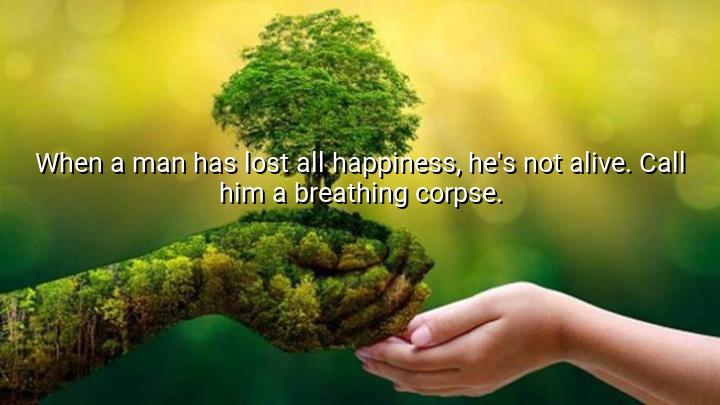




Sophocles’ quote, "When a man has lost all happiness, he's not alive. Call him a breathing corpse," speaks to the profound importance of happiness in defining the essence of life. Sophocles suggests that without happiness, a person is merely existing rather than truly living. He equates the loss of joy and fulfillment to the state of a breathing corpse, implying that without happiness, one lacks the vitality and purpose that makes life worth living.
The comparison to a breathing corpse emphasizes the notion that life is not merely about physical existence—it's about emotional and spiritual well-being. If a person has lost their happiness, they are no longer connected to the deeper aspects of life, such as love, passion, or meaning. Sophocles is conveying that happiness is what truly animates a person, and without it, life becomes hollow and devoid of purpose.
The quote also underscores the idea that happiness is an essential, life-affirming force. In the absence of happiness, even though a person may continue to breathe and function physically, they are disconnected from what makes them fully human. It serves as a reminder that happiness and fulfillment are vital to a complete and meaningful existence, and losing them can feel like a form of living death.
The origin of this quote lies in Sophocles’ works, which often explored the nature of human existence, suffering, and the pursuit of meaning. As a playwright in ancient Greece, Sophocles tackled complex themes about the human condition, and this quote reflects his belief in the vital importance of happiness to a person's sense of life. It speaks to the timeless truth that emotional well-being is just as essential as physical health in defining a person's true existence.

AAdministratorAdministrator
Welcome, honored guests. Please leave a comment, we will respond soon