

The keenest sorrow is to recognize ourselves as the sole cause of all our adversities.
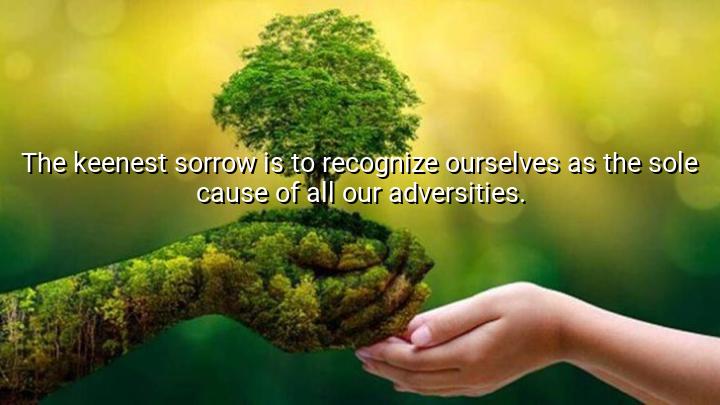




Sophocles’ quote, "The keenest sorrow is to recognize ourselves as the sole cause of all our adversities," speaks to the profound pain that comes with the realization that much of our suffering or misfortune is the result of our own choices or actions. The phrase "keenest sorrow" suggests that this awareness is not just painful, but a deeply cutting, self-inflicted form of regret or guilt. It is the emotional agony that comes with understanding that we are, to some extent, responsible for the difficulties we face in life, whether through mistakes, poor decisions, or inaction.
The quote highlights the psychological burden of self-awareness and accountability. Rather than attributing our hardships to external factors like fate or the actions of others, Sophocles points to the unsettling truth that we may be the architects of our own struggles. This awareness can be paralyzing, as it forces us to confront our own flaws, impulses, and limitations that led to the adverse outcomes in our lives. The emotional weight of this self-recognition is what makes it the "keenest sorrow".
The origin of this quote can be traced to the Greek tragedies for which Sophocles is famous, particularly the theme of self-destruction and tragic flaws (hamartia). His plays often depict characters who, despite their nobility or goodness, fall victim to their own inner weaknesses or hubris, leading to their ultimate downfalls. This idea of self-inflicted suffering is prevalent in his works, and the quote reflects the human tendency to struggle with the reality of personal responsibility for life’s challenges.
In essence, Sophocles is exploring the universal human experience of facing personal accountability for the adversity we encounter. The pain of recognizing our role in creating our own difficulties can be overwhelming, but it also serves as an opportunity for reflection, growth, and change. This recognition, though painful, has the potential to be transformative if it leads to greater self-awareness and the ability to make better choices moving forward.

AAdministratorAdministrator
Welcome, honored guests. Please leave a comment, we will respond soon