

What makes life worth living? Better surely, to yield to the stain of suicide blood in me and seek forgetfulness in the embrace of cold dark death.
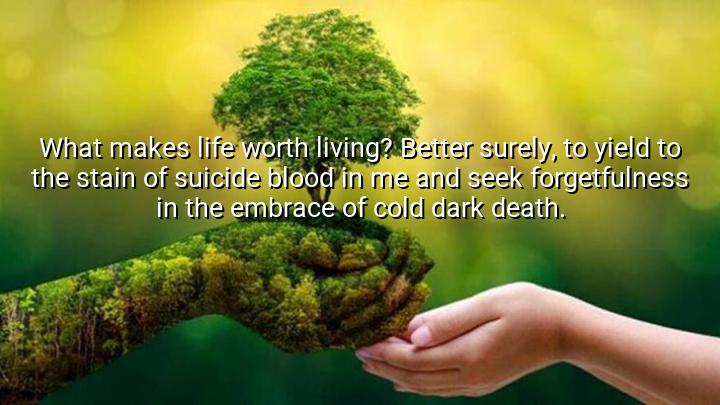




The quote, "What makes life worth living? Better surely, to yield to the stain of suicide blood in me and seek forgetfulness in the embrace of cold dark death," is from Zane Grey, an American author best known for his Western novels. This somber and intense statement reflects a moment of despair and inner conflict, where the narrator questions the meaning and value of life, considering the possibility of ending it. The mention of suicide and death suggests a deep sense of emotional turmoil and a search for escape from overwhelming pain.
Grey's words express a raw and unsettling reflection on the human condition, particularly suffering and hopelessness. The quote confronts the dark side of existence, where someone might feel that the pain of living outweighs the potential joy or purpose. The reference to "cold dark death" implies an all-consuming emptiness and forgetfulness, a desire to escape from the harshness of life into the perceived peace of death, which contrasts with the traditional ideas of hope and meaning.
The origin of this quote comes from Grey’s writing, where he often explored themes of survival, struggle, and emotional complexity. While known for his action-packed adventure novels, Grey also dealt with more personal, psychological themes, revealing a deeper understanding of human emotions, including loneliness, regret, and existential doubt. This quote is a reflection of those darker aspects, providing a glimpse into the internal conflict that characters—or even the author himself—may experience.
Ultimately, this quote serves as a stark and intense exploration of the fragility of the human spirit. It asks difficult questions about life and death, forcing readers to confront the reality of suffering and the inner battles that individuals may face. Grey’s writing, while often centered on rugged external landscapes, also delves deeply into the complex, sometimes painful internal landscapes of the human mind.

AAdministratorAdministrator
Welcome, honored guests. Please leave a comment, we will respond soon