

What if we strove for compassion, for mercy, for forgiveness? And what if we did this for everybody, including people who have harmed others?
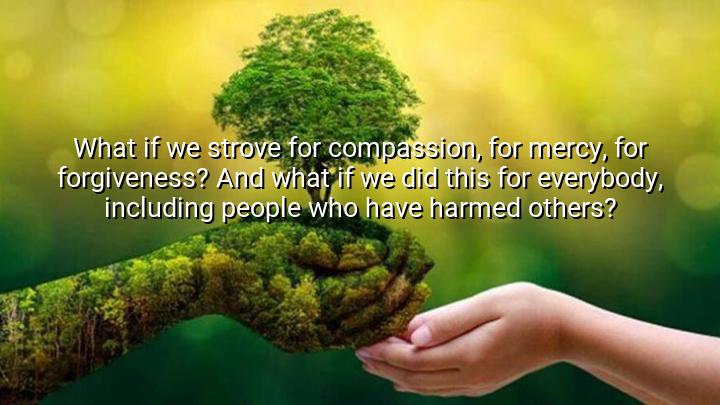




James Forman, Jr.’s quote, "What if we strove for compassion, for mercy, for forgiveness? And what if we did this for everybody, including people who have harmed others?" challenges the idea of selective compassion and forgiveness. Forman is asking us to consider a world where mercy and forgiveness are extended not just to those who have wronged us, but to everyone, including those who have caused harm to others. His question emphasizes the idea that compassion should be unconditional, regardless of someone’s past actions or the harm they may have inflicted.
The quote suggests a radical rethinking of how we approach justice and humanity. Instead of focusing solely on retribution or punishment for those who have caused harm, Forman advocates for a model of healing that includes mercy. He seems to be pointing out that forgiveness and compassion are not just for the innocent or the wronged but are essential for collective healing, including for those who have made mistakes. It’s a call for an inclusive and transformative approach to justice, where everyone is given the opportunity to redeem themselves.
The origin of this perspective can be traced to Forman’s work as a civil rights advocate and lawyer, where issues of racial justice and systemic inequality often intersect with questions of forgiveness and reconciliation. He is well-known for his advocacy for criminal justice reform, particularly in how society treats those who have been involved in crime. His quote reflects a belief in restorative justice, where the focus is on healing, accountability, and restoration, rather than punishment alone.
Ultimately, Forman’s quote encourages a deeper reflection on the power of forgiveness and mercy in creating a more compassionate society. By extending these values even to those who have caused harm, we can begin to break down the barriers of anger and resentment, fostering a culture of healing and redemption. The idea that compassion should be universally applied challenges us to move beyond a cycle of revenge and toward a more restorative, inclusive approach to justice.

AAdministratorAdministrator
Welcome, honored guests. Please leave a comment, we will respond soon