

We've got to work to save our children and do it with full respect for the fact that if we do not, no one else is going to do it.
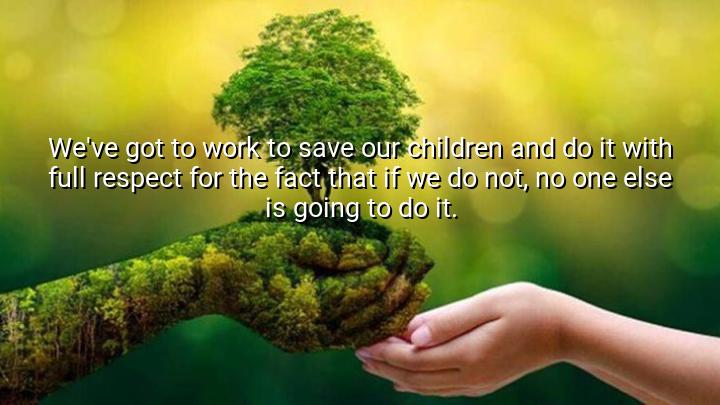




The quote "We've got to work to save our children and do it with full respect for the fact that if we do not, no one else is going to do it." by Dorothy Height underscores the urgent need for collective action and personal responsibility in protecting and supporting children. Height emphasizes that the well-being and future of the next generation are in the hands of adults—particularly those who are in positions to influence change. She calls for a sense of urgency and commitment to address the challenges children face, suggesting that if society does not prioritize their needs, no one else will step in to ensure their safety and success.
Height’s statement is a call to action for both individual and collective efforts to improve the lives of children, particularly in the face of issues like poverty, inequality, education, and healthcare. Her words reflect a belief in the power of community and social responsibility—recognizing that neglecting the needs of children can have long-lasting consequences, not only for the children themselves but for society as a whole. The quote also highlights the importance of respect, implying that efforts to improve children’s lives should be carried out with dignity and a deep regard for their inherent value.
The origin of this quote can be traced to Dorothy Height, a prominent civil rights and women's rights activist who dedicated much of her life to advocating for racial justice, gender equality, and the rights of African American women. Height was deeply involved in education, youth empowerment, and community organizing, particularly in addressing the challenges faced by marginalized children. Her life’s work was focused on ensuring that children, especially those from underrepresented communities, received the care, education, and opportunities they deserved.
Ultimately, Height’s quote calls on society to be accountable for its most vulnerable members, encouraging a strong, unified effort to protect children’s futures. It reflects a broader belief that improving children’s lives is a fundamental responsibility of all adults, and that inaction or neglect can have far-reaching, detrimental effects.

AAdministratorAdministrator
Welcome, honored guests. Please leave a comment, we will respond soon