

Wealth and vegetation go together, and that exacerbates environmental injustice. The poor bear the burden of degraded environments.
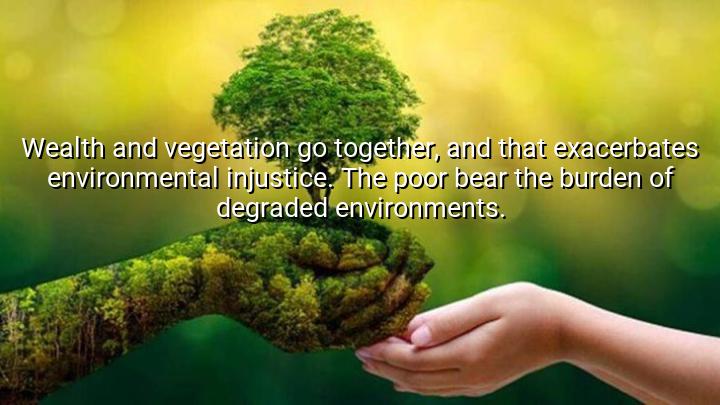




The quote "Wealth and vegetation go together, and that exacerbates environmental injustice. The poor bear the burden of degraded environments." by Natalie Jeremijenko highlights the connection between economic disparities and environmental degradation. Jeremijenko is drawing attention to the fact that wealthier areas tend to have more green spaces and healthier environments, while poorer communities often face the opposite—exposure to polluted air, contaminated water, and lack of access to natural resources like parks or vegetation. This inequality, according to Jeremijenko, contributes to environmental injustice, where marginalized communities bear the greatest environmental harm.
The origin of this quote comes from Jeremijenko’s work as an environmental artist and engineer, focused on the intersection of technology, ecology, and social justice. She is known for exploring how environmental issues affect social equity and for advocating solutions that involve communities in solving environmental problems. Jeremijenko’s quote critiques the way in which wealth influences access to a clean and healthy environment, with wealthier communities often benefiting from better urban planning and green spaces, while poorer areas are left with the consequences of industrial pollution or neglected urban environments.
Jeremijenko’s statement underscores the idea that environmental justice is not just about protecting nature but also about addressing the social inequalities that come with environmental degradation. The poor are often forced to live in areas that are most vulnerable to environmental harm, such as near toxic waste sites, industrial zones, or areas with inadequate infrastructure. This disproportionate impact on marginalized groups is what she identifies as environmental injustice, where the benefits of a healthy environment are not shared equally.
In essence, Jeremijenko is calling for a more equitable approach to environmental policy, one that ensures that all communities—regardless of their wealth or social standing—have access to clean air, green spaces, and a safe environment. Her quote points to the need for social change that considers the intersection of ecological health and social equity to address the underlying issues of environmental injustice.

AAdministratorAdministrator
Welcome, honored guests. Please leave a comment, we will respond soon