

We used to root for the Indians against the cavalry, because we didn't think it was fair in the history books that when the cavalry won it was a great victory, and when the Indians won it was a massacre.
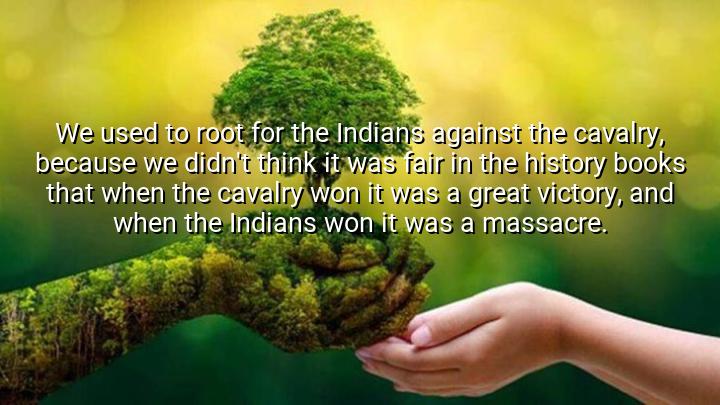




The quote "We used to root for the Indians against the cavalry, because we didn't think it was fair in the history books that when the cavalry won it was a great victory, and when the Indians won it was a massacre" by Dick Gregory, an American comedian and civil rights activist, reflects his critique of how history is often told from a biased perspective. Gregory highlights the double standard in how Native Americans and white settlers (represented by the cavalry) are portrayed in historical narratives. While victories by the cavalry are celebrated as great triumphs, victories by the Native Americans are often framed as massacres, even though the context of both situations was often similar.
Gregory’s words emphasize the injustice in the way history has been recorded, especially in relation to the treatment of Native Americans. The portrayal of Native Americans as barbaric or violent in the face of colonial expansion reflects the dominant narrative created by the victors. By contrasting these portrayals, Gregory sheds light on the unfairness of labeling Native American resistance as a massacre while glorifying the actions of colonizers as heroism or military success.
The quote also speaks to the idea that history is often shaped by the perspective of those in power. The cavalry, as representatives of the expanding United States, had the means to control how the narrative was told, relegating the Native Americans to the role of victims. Gregory's comment serves as a call for more balanced and inclusive representations of historical events, encouraging people to challenge historical biases and question whose stories are being told.
Ultimately, Gregory’s reflection on the history of Native Americans and their portrayal in the media urges a more nuanced and critical approach to understanding the past. It highlights the importance of reexamining historical narratives and recognizing how the dominant perspectives shape our understanding of victory and defeat, justice, and injustice.

AAdministratorAdministrator
Welcome, honored guests. Please leave a comment, we will respond soon