

We shall listen, not lecture; learn, not threaten. We will enhance our safety by earning the respect of others and showing respect for them. In short, our foreign policy will rest on the traditional American values of restraint and empathy, not on military might.
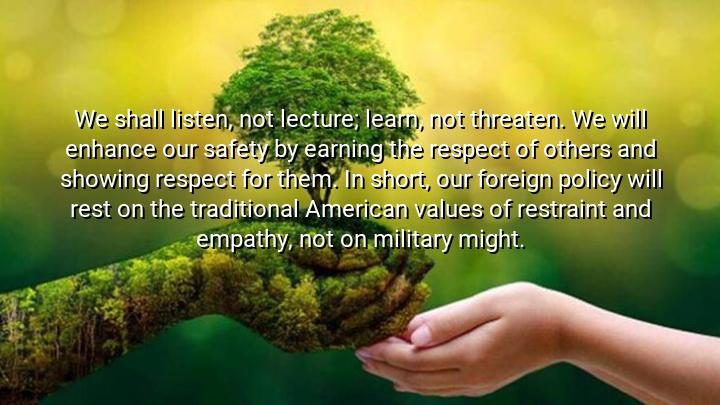




The quote "We shall listen, not lecture; learn, not threaten. We will enhance our safety by earning the respect of others and showing respect for them. In short, our foreign policy will rest on the traditional American values of restraint and empathy, not on military might" by Theodore C. Sorensen reflects a vision for a more diplomatic, respectful, and empathetic approach to international relations. Sorensen, a prominent American political advisor and speechwriter for President John F. Kennedy, advocates for a shift away from aggressive or coercive tactics, like military action, and towards listening, understanding, and mutual respect in foreign diplomacy.
The quote stresses that true strength and safety come not from imposing power through threats or force but through building trust, respect, and empathy with others. Sorensen argues that effective foreign policy should be based on restraint, meaning an avoidance of unnecessary conflict or military action, and empathy, which involves understanding the concerns and perspectives of other nations. In this vision, the United States would engage with the world in a manner that earns the respect of others, rather than demanding it through fear or intimidation.
The origin of this quote can be found in Sorensen's work with John F. Kennedy, particularly during his tenure as Special Counsel and primary speechwriter. Sorensen was a key figure in shaping Kennedy's public rhetoric, which often focused on peace, diplomacy, and international cooperation. This approach was exemplified in Kennedy’s speeches, most notably in his inaugural address where he called for a new era of diplomacy. Sorensen believed that America’s foreign policy should prioritize communication, understanding, and cooperation over military confrontation, aligning with the principles of restraint and empowerment through peaceful means.
In the broader context, Sorensen's quote advocates for a human-centered approach to diplomacy—one that values dialogue over force and mutual respect over dominance. It challenges the idea that global safety is best achieved through military might and instead encourages policies grounded in the traditional American values of fairness, empathy, and collaboration. Ultimately, Sorensen’s words urge leaders to focus on building relationships that foster trust and peace rather than relying on power struggles and threats.

AAdministratorAdministrator
Welcome, honored guests. Please leave a comment, we will respond soon