

We see ourselves in terms of yesterday and today. Our Heavenly Father sees us in terms of forever.
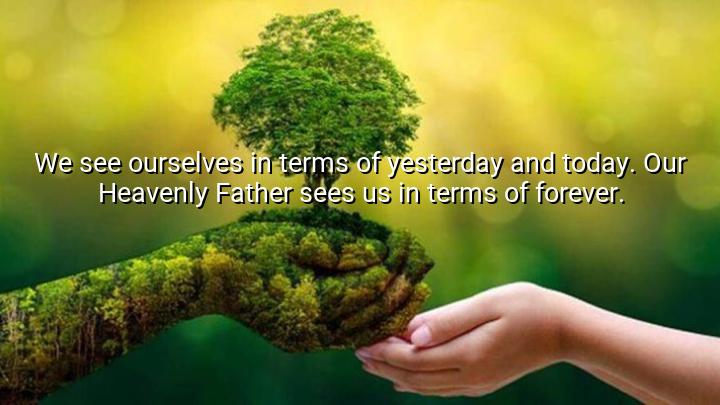




The quote by Joseph B. Wirthlin — “We see ourselves in terms of yesterday and today. Our Heavenly Father sees us in terms of forever” — highlights the difference between human and divine perspectives on life and identity. While people often focus on their past mistakes or present circumstances, this quote reminds us that God’s view is much broader and eternal. He sees beyond our immediate struggles and failures, recognizing our potential and worth across all time.
Wirthlin’s words encourage us to adopt a more hopeful and forgiving outlook, inspired by the eternal nature of God’s love and understanding. Instead of being limited by regret or current challenges, we are invited to trust in God’s long-term vision for us, which includes growth, redemption, and ultimate fulfillment. This perspective offers comfort and motivation to keep moving forward.
The origin of this quote comes from Joseph B. Wirthlin, a prominent leader in The Church of Jesus Christ of Latter-day Saints, known for his inspiring teachings on faith and hope. His message reflects the core Christian belief in God’s everlasting care and the eternal nature of the soul, encouraging believers to see their lives through the lens of eternity.
In essence, this quote teaches that while we may be caught up in the temporary, God’s view is eternal. It invites us to trust in His divine plan and to see ourselves as more than our past or present, embracing a hopeful future shaped by God’s infinite love.

AAdministratorAdministrator
Welcome, honored guests. Please leave a comment, we will respond soon