

We see and hear and otherwise experience very largely as we do because the language habits of our community predispose certain choices of interpretation.
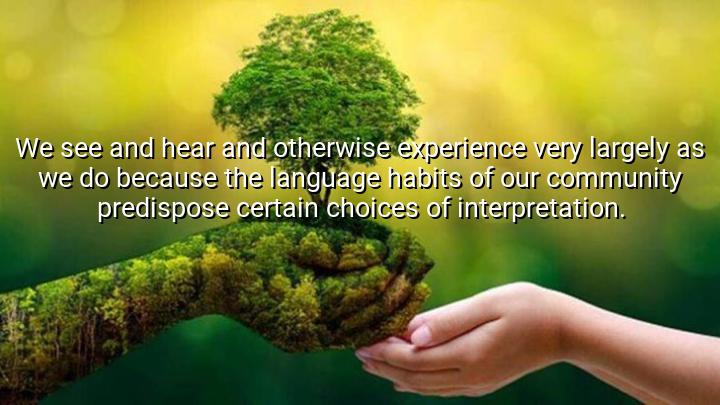




In this quote, Edward Sapir, an influential linguist and anthropologist, highlights the role that language habits play in shaping how we perceive and interpret the world around us. He suggests that the way we experience reality—whether through sight, sound, or other senses—is largely influenced by the language and cultural norms of the community in which we are raised. The way language is structured, the words we use, and the meanings we attach to them all contribute to how we interpret our environment and the events that unfold within it.
Sapir’s statement emphasizes that language is not just a tool for communication, but a lens through which we filter and make sense of the world. The language habits of our community can predispose us to focus on certain aspects of reality while ignoring others, guiding our perceptions and judgments. For example, the structure and vocabulary of a language might lead speakers to think more about certain concepts, such as time or space, in ways that are different from those who speak a different language.
By saying “predispose certain choices of interpretation,” Sapir points out that language does not simply reflect reality; it actively shapes it. It influences how we categorize and prioritize information, framing our experiences in a specific cultural and linguistic context. This idea aligns with Sapir's broader theory of linguistic relativity, which suggests that the structure of a language can affect the way its speakers understand and relate to the world.
Ultimately, Sapir’s quote underscores the profound connection between language and thought. It suggests that our perception of the world is not solely an individual or universal experience, but one that is shaped by the specific linguistic and cultural frameworks within which we operate. Through this lens, language becomes not just a tool for communication, but a fundamental force that molds how we see, hear, and interpret everything around us.

AAdministratorAdministrator
Welcome, honored guests. Please leave a comment, we will respond soon