

We need a new order of ministers to stand in pulpits. It's not enough to sing and praise God in worship services. Any religion that doesn't encourage us to work together to end the needless suffering all around us is godless.
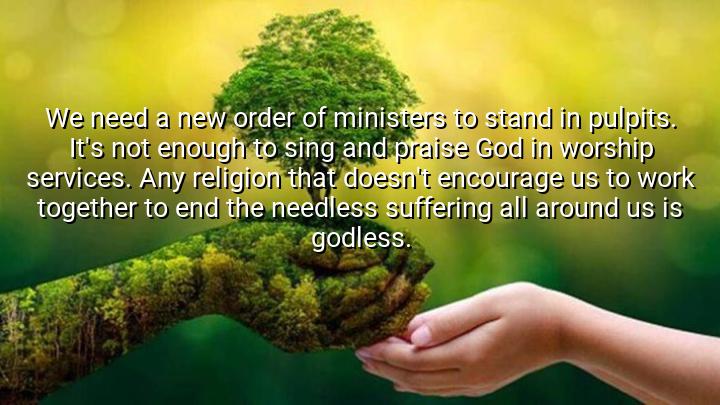




Susan L. Taylor’s quote emphasizes the importance of social responsibility within religious practice. She argues that a true religion should not be limited to worship and praise alone but must actively encourage followers to work together to end suffering in the world. According to Taylor, any faith that doesn’t inspire action to alleviate human suffering—whether through charity, social justice, or community service—fails to live up to its divine purpose and is, in essence, godless.
The core of Taylor’s statement is a critique of religious institutions that focus too heavily on rituals and personal devotion without considering the practical impact on society. By saying, “We need a new order of ministers,” she calls for a shift in the way clergy and religious leaders engage with their communities. They must not only lead in spiritual matters but also take an active role in addressing societal problems and encouraging collective action. Taylor stresses that faith must be coupled with tangible efforts to improve the world, such as working to end poverty, violence, and inequality.
In labeling a religion that does not promote action against needless suffering as “godless,” Taylor challenges the idea that faith is solely about personal salvation or devotion to God. She underscores the idea that a true spiritual path is one that promotes justice, compassion, and collaboration to make the world a better place for everyone. This perspective aligns with the belief that religious teachings should inspire ethical behavior and service to others, not just a focus on personal belief.
The origin of this quote comes from Susan L. Taylor, a well-known editor, author, and advocate for social justice. Taylor’s work, particularly as the former editor-in-chief of Essence Magazine, often tackled issues related to faith, race, and community empowerment. She has long been an advocate for using spirituality to create positive social change, and this quote reflects her deep commitment to integrating personal faith with social action in order to address the suffering that exists in the world.

AAdministratorAdministrator
Welcome, honored guests. Please leave a comment, we will respond soon