

We must not permit our respect for the dead or our sympathy for the living to lead us into an act of injustice to the balance of the living.
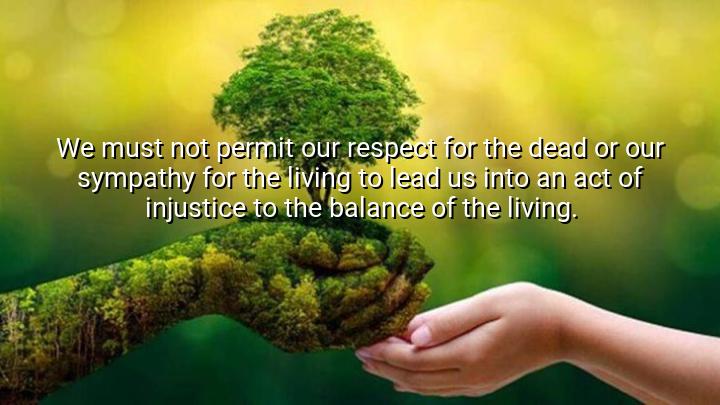




Davy Crockett’s quote, "We must not permit our respect for the dead or our sympathy for the living to lead us into an act of injustice to the balance of the living," emphasizes the importance of justice and fairness in how we honor both the deceased and the living. Crockett is arguing that while it’s natural to feel sympathy and respect for those who have passed and for those who are suffering, those emotions should not cloud our judgment or lead us to actions that disrupt the equilibrium of the present. In essence, justice for the living must not be sacrificed in the name of honoring the dead or simply out of empathy for others.
Crockett’s words can be seen as a call to maintain balance when making decisions, particularly when those decisions involve legal, moral, or social questions. He warns against allowing emotions—whether they are respect for the deceased or sympathy for the living—to lead us into actions that create injustice. This suggests that both the living and the dead deserve our respect, but not at the expense of the broader moral or societal balance. For Crockett, true justice means that every individual, regardless of their status, is treated fairly without bias or undue influence from our emotions.
The quote may have arisen from Crockett’s experience in public life, where he was known for his commitment to the rights of people and his dedication to fairness. He was a frontiersman, politician, and war hero, and his leadership involved making difficult decisions where sympathy and justice had to be carefully weighed. The quote highlights his understanding that even in the most difficult or emotionally charged situations, one must act in a way that upholds the integrity of justice, ensuring that no group is unfairly favored or harmed.
Ultimately, Crockett’s message is a timeless reminder that justice should be pursued without favoritism or emotional distortion. His quote challenges us to keep a clear head when making decisions, particularly those that have long-lasting effects on society. Respect and sympathy are important, but they should never come at the expense of fairness or equity for all.

AAdministratorAdministrator
Welcome, honored guests. Please leave a comment, we will respond soon