

We must develop and maintain the capacity to forgive. He who is devoid of the power to forgive is devoid of the power to love. There is some good in the worst of us and some evil in the best of us. When we discover this, we are less prone to hate our enemies.
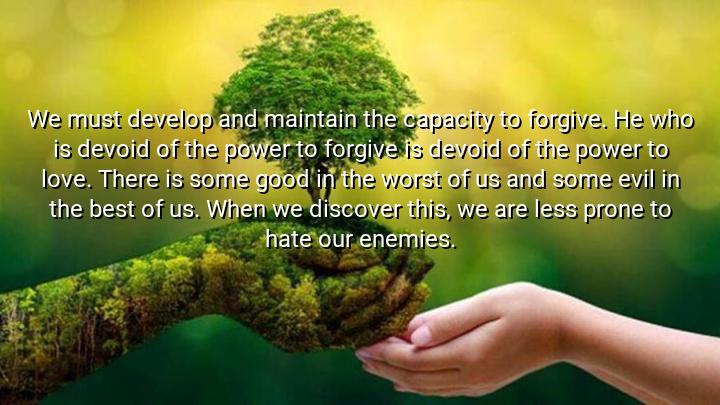




The quote "We must develop and maintain the capacity to forgive. He who is devoid of the power to forgive is devoid of the power to love. There is some good in the worst of us and some evil in the best of us. When we discover this, we are less prone to hate our enemies." by Martin Luther King, Jr. reflects his deeply held belief in the transformative power of forgiveness, love, and humility. At the heart of this message is the idea that to truly love, one must also possess the ability to forgive, because both qualities stem from compassion, understanding, and moral strength.
King emphasizes that forgiveness is not just an occasional act but a constant practice—something we must intentionally develop and maintain. It is a moral discipline as much as an emotional gesture. The assertion that those who lack the power to forgive also lack the power to love underscores the interdependence of these virtues: true love, especially in a social or spiritual sense, cannot flourish where resentment and bitterness remain.
The line "There is some good in the worst of us and some evil in the best of us" introduces an important theme of human complexity. By acknowledging that no one is purely good or evil, King calls for empathy and self-awareness. This understanding helps diminish the tendency to hate our enemies, as we begin to see them not as monsters, but as flawed individuals like ourselves—capable of both wrongdoing and redemption.
This quote originates from King’s sermons and writings during the Civil Rights Movement, where he frequently addressed themes of nonviolence, justice, and reconciliation. It encapsulates his commitment to moral leadership and the belief that social change must be rooted in love and forgiveness, not vengeance. King's vision was not only to liberate the oppressed but also to heal the hearts of the oppressors—a goal only possible through the courageous act of forgiveness.

AAdministratorAdministrator
Welcome, honored guests. Please leave a comment, we will respond soon