

We imagine that we want to escape our selfish and commonplace existence, but we cling desperately to our chains.
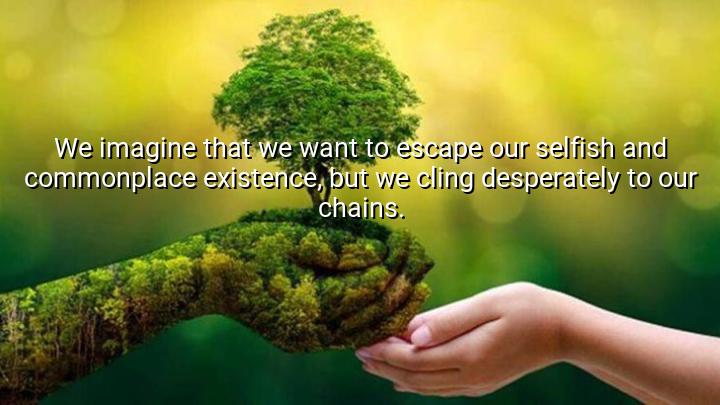




Anne Sullivan’s quote, "We imagine that we want to escape our selfish and commonplace existence, but we cling desperately to our chains," reflects the internal conflict many people face when seeking personal growth or change. Sullivan suggests that while we often imagine a life of greater freedom, fulfillment, or purpose, we are frequently unwilling to break free from the familiar and comfortable constraints that hold us back. These chains can represent both external circumstances and our own habits or fears that prevent us from stepping into a more meaningful life.
The origin of this sentiment likely stems from Sullivan’s work as a teacher and mentor to Helen Keller, where she witnessed firsthand the struggle to overcome limitations and embrace new possibilities. Sullivan herself was someone who had to overcome tremendous challenges, including her own physical disabilities, and she often spoke about the difficulties of achieving personal freedom and growth. In this quote, she highlights how easy it is to become attached to the very circumstances that limit us, even when we yearn for something greater.
Sullivan's reference to chains speaks to the psychological and emotional barriers that often keep us rooted in our current situation. Even though we may recognize that our lives are selfish or commonplace, there is often a deep fear of the unknown that causes us to cling to what is familiar. This paradox—desiring change but resisting it—is a common human experience and reflects the tension between our aspirations and the comfort of the status quo.
In essence, Sullivan’s quote is a reflection on the complexity of personal growth and the internal struggles that prevent us from breaking free. It suggests that while we may dream of a better life, the fear of change and the comfort of familiarity often keep us trapped in the very circumstances we wish to escape. The quote calls attention to the need to confront and overcome these chains in order to truly achieve freedom and transformation.

AAdministratorAdministrator
Welcome, honored guests. Please leave a comment, we will respond soon