

We have been brainwashed into craving a diet that is killing us. What we believe tastes good is generally what we have been socially conditioned to enjoy.
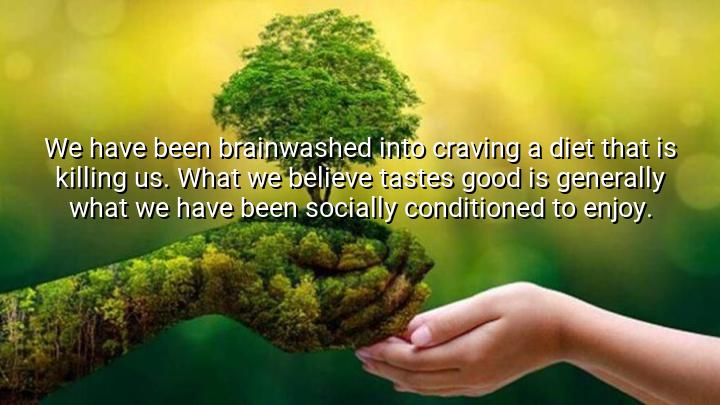




The quote "We have been brainwashed into craving a diet that is killing us. What we believe tastes good is generally what we have been socially conditioned to enjoy." by Jane Velez-Mitchell critiques the modern diet and food culture, suggesting that many of our cravings and food preferences are not innate but rather the result of social conditioning and marketing. Velez-Mitchell argues that society has shaped what we think is tasty or desirable, often promoting foods that may not be the healthiest choices. These foods, she believes, contribute to the rise of chronic health issues and are damaging to our bodies in the long term.
Velez-Mitchell’s statement underscores how we are often influenced by advertising, food industries, and cultural norms that dictate what foods we should enjoy. Over time, this social conditioning leads us to crave foods that may be high in sugar, fat, and salt, which can be harmful to our health. The idea of being "brainwashed" suggests that these habits are deeply ingrained, making it difficult for individuals to recognize the impact of their food choices on their overall well-being.
The origin of this quote can be traced to Velez-Mitchell’s advocacy for healthier living and her critique of modern food systems. As a journalist and activist, she often highlights the negative effects of processed foods and the dietary patterns promoted by food industries. Her work often explores how these patterns contribute to health problems and obesity on a societal scale, encouraging people to reconsider their food choices and adopt more whole food approaches to nutrition.
Velez-Mitchell’s statement challenges individuals to rethink their relationship with food and to become more aware of how cultural influences shape their eating habits. It serves as a call for greater awareness and consciousness in food choices, advocating for a shift toward healthier, more natural diets that nourish the body rather than harm it.

AAdministratorAdministrator
Welcome, honored guests. Please leave a comment, we will respond soon