

In elementary school, we should teach nonviolent conflict resolution and healthy communication skills, which will help children cope with issues like rejection and sexuality later in life.
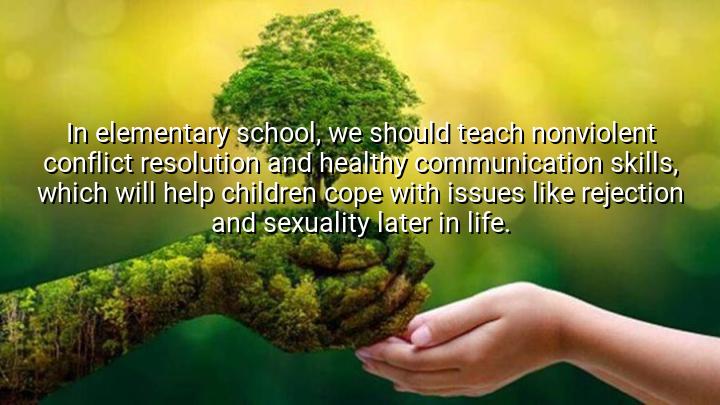




Jane Velez-Mitchell’s quote, "In elementary school, we should teach nonviolent conflict resolution and healthy communication skills, which will help children cope with issues like rejection and sexuality later in life," emphasizes the importance of equipping children with the tools to handle conflict and emotions in a constructive way from a young age. She advocates for teaching nonviolent conflict resolution and healthy communication as essential skills that can help children navigate the challenges they will face throughout their lives, such as dealing with rejection or understanding sexuality.
The quote highlights the idea that the foundation for emotional resilience and healthy relationships is built early in life. By learning to communicate effectively and resolve conflicts peacefully, children are better prepared to face the complexities of social interactions, including peer pressure, bullying, and the emotional challenges of adolescence. This proactive approach can create a generation of individuals who are more empathetic, self-aware, and capable of handling difficult emotions.
Velez-Mitchell’s perspective likely stems from her work as a journalist and advocate for mental health and social issues. Throughout her career, she has often spoken out on the need for better emotional education and awareness. Her own experiences and observations of societal struggles, especially around issues like violence and mental health, have likely shaped her belief that early education can play a pivotal role in preventing future conflicts and emotional difficulties.
Ultimately, Velez-Mitchell’s quote calls for a shift in how we approach childhood education. By integrating emotional literacy, conflict management, and communication skills into elementary education, we can help children develop the coping mechanisms needed to address more complex issues later in life, fostering a society where individuals are equipped to handle emotional and social challenges with compassion and understanding.

AAdministratorAdministrator
Welcome, honored guests. Please leave a comment, we will respond soon