

We crucify ourselves between two thieves: regret for yesterday and fear of tomorrow.
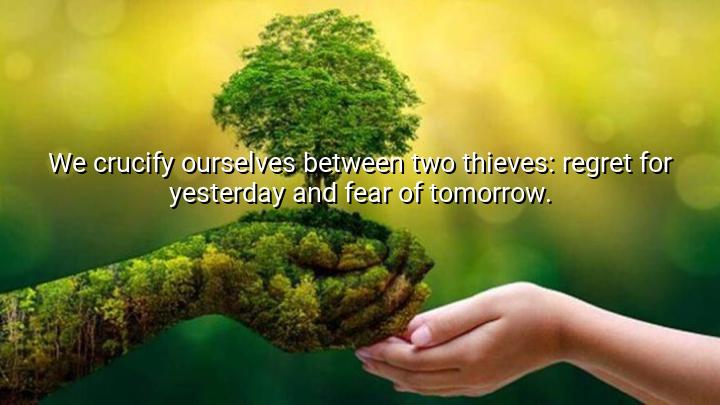




The quote "We crucify ourselves between two thieves: regret for yesterday and fear of tomorrow" comes from Fulton Oursler, an American journalist, playwright, and author best known for his religious and inspirational works in the mid-20th century. This evocative metaphor draws upon the imagery of the crucifixion, where Christ was crucified between two thieves, to illustrate how people mentally and emotionally torment themselves. Oursler uses this powerful symbolism to highlight the destructive nature of living outside the present moment.
The "two thieves" represent regret and fear—two common mental states that rob us of peace and clarity. Regret for yesterday keeps us tied to past mistakes, guilt, or missed opportunities, while fear of tomorrow fills us with anxiety and uncertainty about the future. When we dwell on these two extremes, we often feel immobilized, distracted, or overwhelmed, unable to fully engage with the now.
By saying we "crucify ourselves," Oursler emphasizes that this suffering is self-inflicted. It is not the events of the past or future that cause pain, but our unwillingness to let go and be present. The quote encourages us to shift our focus away from what we cannot change or predict and toward what we can influence—our actions, attitude, and awareness in the present moment.
This insight aligns with many spiritual and philosophical traditions that emphasize mindfulness and acceptance as paths to inner freedom. Whether in religious reflection or psychological self-care, Oursler’s words serve as a timeless reminder to stop punishing ourselves for what was or might be, and to instead live more fully in the only moment we truly have: today.

AAdministratorAdministrator
Welcome, honored guests. Please leave a comment, we will respond soon