

We can only learn to know ourselves and do what we can - namely, surrender our will and fulfill God's will in us.
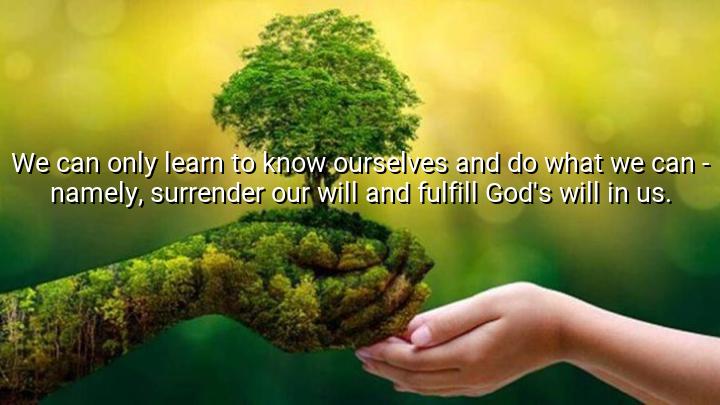




The quote "We can only learn to know ourselves and do what we can - namely, surrender our will and fulfill God's will in us" by Saint Teresa of Avila speaks to the profound spiritual journey of self-awareness and obedience to divine guidance. At its core, this quote emphasizes the idea that true self-knowledge comes from understanding one's own limitations and desires, and then surrendering one's personal will to a higher purpose. Surrendering the will is not about passivity but about aligning oneself with God's will, which is seen as a greater force that leads to fulfillment and spiritual growth.
Saint Teresa of Avila, a prominent Spanish mystic and Carmelite nun, believed that the path to true spiritual enlightenment and peace lies in this act of surrender. According to her teachings, prayer and meditation are key practices through which one can attain the clarity needed to understand both God's will and one's role in fulfilling it. The quote suggests that by submitting to this divine plan, individuals can find a deeper sense of purpose and meaning in life, moving beyond self-centered desires toward a more profound spiritual connection.
The origin of this quote is rooted in Saint Teresa of Avila's spiritual writings, particularly in her influential work The Interior Castle, where she discusses the importance of self-reflection, prayer, and the stages of spiritual growth. Her work is deeply imbued with Catholic mysticism and contemplative spirituality, urging individuals to focus not on personal ambitions but on becoming instruments of God's will. In her view, the ultimate goal of life is not the fulfillment of one's own desires but the alignment of one's life with divine purpose.
In essence, this quote encapsulates Saint Teresa of Avila's teaching that the highest form of self-knowledge comes not through the pursuit of worldly goals but by surrendering one’s ego and aligning one's actions with God's divine plan. It invites a life of humility and devotion, where obedience and faith become the means through which individuals discover their true selves and fulfill their divine calling. The quote underscores the importance of balancing personal will with the greater good of God's design.

AAdministratorAdministrator
Welcome, honored guests. Please leave a comment, we will respond soon