

We are still living in the aftershock of Hiroshima, people are still the scars of history.
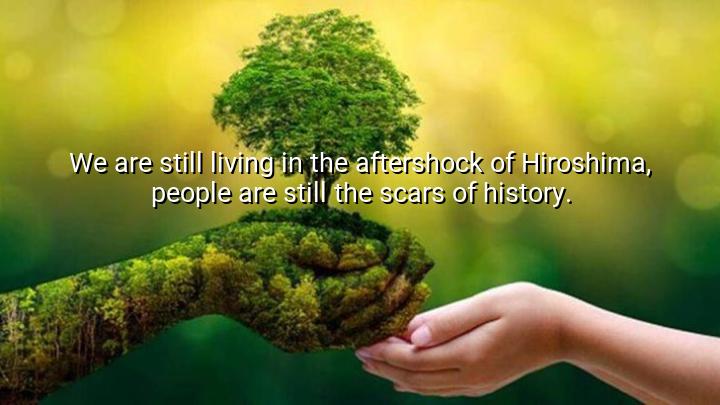




In this quote, Edward Bond reflects on the lasting impact of the Hiroshima bombing, suggesting that the effects of such profound historical events continue to resonate long after they occur. By referring to the "aftershock" of Hiroshima, Bond is speaking to the lingering consequences—both physical and psychological—that remain from traumatic events like the atomic bombing. He emphasizes that people are not just witnesses to history but also scarred by it, carrying the trauma of past events into the present.
Bond’s statement implies that history, especially moments of profound violence and devastation, leaves permanent marks on individuals and societies. The use of the word "scars" symbolizes the enduring emotional and psychological effects that events such as Hiroshima have had on those who lived through them, as well as on future generations who inherit the legacy of such violence. His words suggest that humanity cannot easily escape the trauma of its past; it shapes the way we view the world and interact with others.
The origin of this quote lies in Bond’s work as a playwright and his exploration of human suffering and the consequences of war in his works. As a writer deeply concerned with the effects of violence on society, Bond often delved into the impact of historical tragedies on the individual and collective psyche. His reference to Hiroshima, a defining moment in World War II, serves as a powerful metaphor for how global events continue to influence the human condition.
Ultimately, Bond’s quote serves as a reminder of the long-term effects of historical events, particularly violence and war, on the fabric of society. It urges us to acknowledge the enduring scars of history, which shape the way individuals and societies move forward. These aftershocks are not only visible in physical remnants but are felt in the emotional and psychological struggles that persist through generations.

AAdministratorAdministrator
Welcome, honored guests. Please leave a comment, we will respond soon