

We are not our own. We do not belong to ourselves. But we have been purchased with a dear price. We have cost an immense sum, even the sufferings and death of the Son of God.
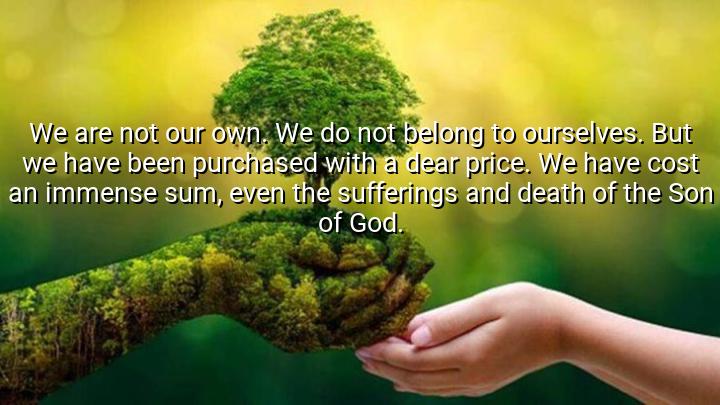




The quote "We are not our own. We do not belong to ourselves. But we have been purchased with a dear price. We have cost an immense sum, even the sufferings and death of the Son of God" by Ellen G. White, an influential figure in the Seventh-day Adventist Church, reflects a deeply religious perspective on the value of human life and salvation. White emphasizes that humans are not inherently independent but belong to a higher power, having been redeemed at a great cost—the sufferings and death of Jesus Christ. This concept underscores the idea of sacrifice and the divine price paid for humanity’s salvation.
White's words draw on Christian theological teachings, particularly the belief that Jesus' sacrifice on the cross was the ultimate act of redemption for all of humanity. She implies that because of this immense sacrifice, humans should recognize their value and live in a way that honors the sacrifice made for them. In this context, the quote speaks to the moral responsibility to live a life that reflects gratitude and reverence for the atonement Christ made, recognizing that our lives are no longer just our own to control.
The origin of this quote is rooted in White’s religious writings, where she often explored the concept of salvation, redemption, and the cost of grace. As a founder of the Seventh-day Adventist Church, her teachings focused on the centrality of Christ’s sacrifice and how it defines the relationship between humanity and the divine. This particular quote is an example of how White articulated the idea of Christ’s atonement as the cornerstone of Christian belief.
Ultimately, this quote serves as a reminder of the sacrifice made for humanity and the profound value placed on every individual. White’s words encourage believers to reflect on their responsibility to live in accordance with the sacrifice made for them, living lives of gratitude, reverence, and purpose. It is a call to recognize that our lives have been bought at an immense cost and therefore should be lived with honor and respect for that divine investment.

AAdministratorAdministrator
Welcome, honored guests. Please leave a comment, we will respond soon