

We are more often frightened than hurt; and we suffer more from imagination than from reality.
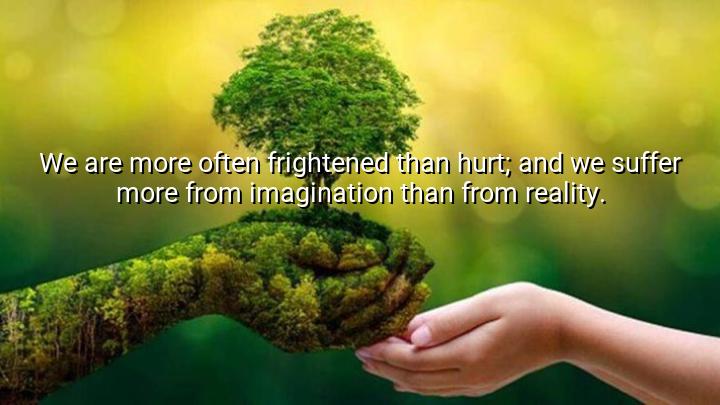




The quote "We are more often frightened than hurt; and we suffer more from imagination than from reality" by Lucius Annaeus Seneca, a Stoic philosopher, speaks to the human tendency to fear what may happen rather than confronting actual harm. Seneca is emphasizing that fear and worry are often based on imagined scenarios, rather than real events. People, he suggests, frequently experience more anxiety about potential outcomes than the actual hardships they face in life.
Seneca's reference to suffering more from imagination than from reality highlights the Stoic belief that our thoughts and perceptions greatly influence our emotional states. Rather than allowing external events to dictate our peace of mind, Stoicism teaches that much of our suffering arises from how we perceive and react to circumstances. The human mind tends to dwell on worst-case scenarios, leading to unnecessary distress and anxiety over situations that may never materialize.
The quote also reflects a key Stoic principle: we have limited control over external events, but we can control our responses and attitudes toward them. Seneca is reminding us that much of our pain comes from mental projections and overthinking. By focusing on the present moment and confronting challenges directly, we can reduce the emotional toll of potential future troubles that might never come to pass.
Ultimately, Seneca encourages a shift in perspective, urging individuals to recognize the disproportionate power of their thoughts. By facing reality without succumbing to the exaggerated fears created by the imagination, we can achieve a greater sense of calm and resilience, free from unnecessary suffering.

AAdministratorAdministrator
Welcome, honored guests. Please leave a comment, we will respond soon