

We are learning, too, that the love of beauty is one of Nature's greatest healers.
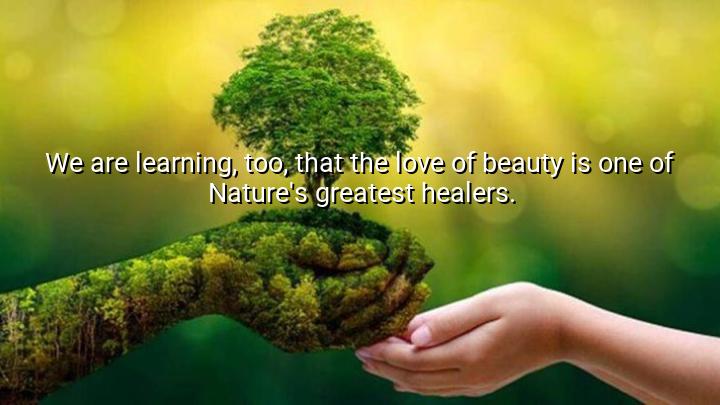




Ellsworth Huntington’s quote, "We are learning, too, that the love of beauty is one of Nature's greatest healers," emphasizes the therapeutic power of appreciating the natural world. Huntington suggests that experiencing beauty—whether in nature, art, or life—can have a profound healing effect on the human spirit. The quote implies that beauty has the ability to restore, uplift, and bring peace to individuals, helping them recover from emotional or psychological distress. This highlights the connection between the aesthetic experience and mental well-being.
The statement also alludes to the idea that human beings are inherently drawn to the beauty around them as a source of comfort and restoration. Whether it's the serene landscape, the harmony in nature, or the delicate intricacies of the natural world, the experience of beauty can be a catalyst for emotional healing. This connection between beauty and healing is rooted in a deep understanding of the human need for balance and tranquility amidst life's challenges.
Huntington’s perspective also reflects the broader philosophical notion that beauty is not just an aesthetic quality but something that can impact one's physical and emotional health. The love of beauty, whether in nature or art, has the power to rejuvenate the mind and body, offering solace and a sense of connection to the world around us. This idea has been echoed by various thinkers who believe that experiencing beauty can help individuals find peace, balance, and emotional resilience.
The origin of this quote comes from Ellsworth Huntington, an American geographer and scholar known for his studies on climate, geography, and human health. Huntington was deeply interested in the ways that the environment influenced human behavior and well-being, and his work often explored the connections between nature and human development. This quote reflects his belief in the healing and restorative power of beauty as a key element of human flourishing.

AAdministratorAdministrator
Welcome, honored guests. Please leave a comment, we will respond soon