

We are always on the anvil; by trials God is shaping us for higher things.
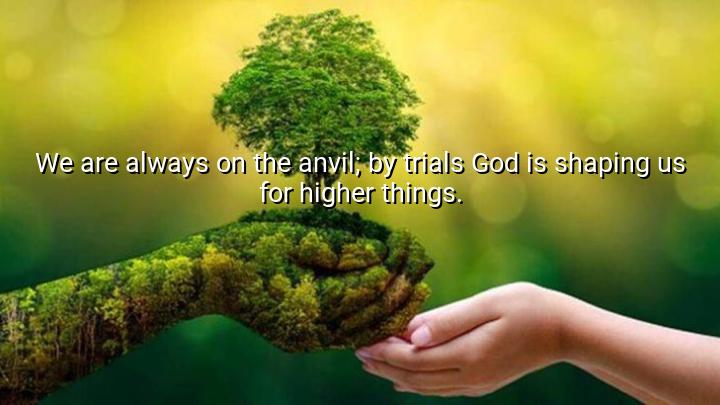




The quote "We are always on the anvil; by trials God is shaping us for higher things" by Henry Ward Beecher uses the metaphor of an anvil, a tool used by blacksmiths to shape metal, to describe the process of personal growth through challenges and difficulties. Beecher suggests that life’s trials and struggles are not random or meaningless, but instead are part of a divine plan where God uses these hardships to mold us into better, stronger versions of ourselves. The idea is that just as metal is shaped and refined through the hammering process, so too are we being shaped by our experiences for greater and more meaningful purposes.
Beecher's quote emphasizes the belief that life is a continuous process of development and transformation, where adversity serves as a tool for growth. In this context, the anvil represents both the hardship we face and the potential that these challenges have to refine our character, pushing us toward higher things—whether that means spiritual fulfillment, personal wisdom, or a deeper understanding of the world around us. The reference to God suggests that these experiences are not arbitrary but are divinely orchestrated for a purpose beyond our immediate understanding.
Henry Ward Beecher, a prominent 19th-century American preacher and social reformer, was known for his optimistic view of life and faith, especially in the face of suffering. His sermons and writings often focused on the themes of hope, faith, and the redemptive power of trials. In this quote, Beecher encourages individuals to see their struggles not as punishments, but as opportunities for growth and spiritual refinement. His perspective reflects a common theme in Christian thought, where suffering is often viewed as a means of building character and drawing closer to the divine.
Ultimately, Beecher’s quote invites us to reframe our approach to challenges. Rather than seeing them as burdens or setbacks, he encourages us to view them as part of a larger journey, a process that is refining us for something greater. By understanding that we are constantly on the anvil of life, we can cultivate a sense of purpose and resilience in the face of adversity, trusting that each difficulty is contributing to our spiritual and personal development.

AAdministratorAdministrator
Welcome, honored guests. Please leave a comment, we will respond soon