

We are able to find everything in our memory, which is like a dispensary or chemical laboratory in which chance steers our hand sometimes to a soothing drug and sometimes to a dangerous poison.
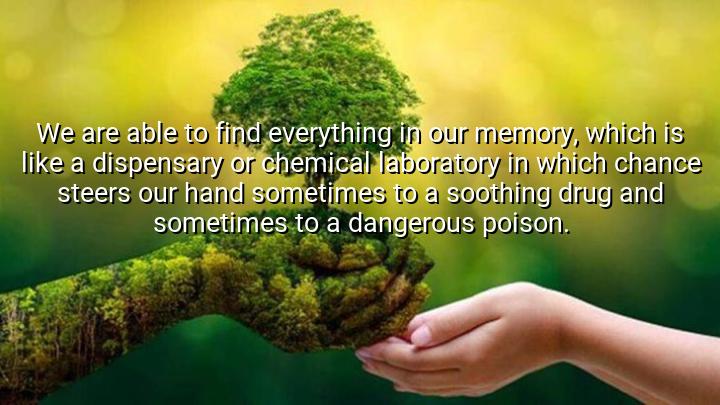




The quote "We are able to find everything in our memory, which is like a dispensary or chemical laboratory in which chance steers our hand sometimes to a soothing drug and sometimes to a dangerous poison" by Marcel Proust explores the complex and unpredictable nature of memory. Proust compares memory to a laboratory where the events, emotions, and experiences we store can sometimes offer comfort and insight (soothing drug), but at other times, they can bring back painful or harmful thoughts (dangerous poison). The idea that chance guides which memories resurface suggests that our minds are not always in control of what we remember or how those memories affect us.
Proust's analogy reflects his belief in the subjectivity and fluidity of memory, as well as its profound impact on our emotional lives. Memory does not simply recall facts; it can shape our mood, our perceptions of the present, and even our future decisions. The dispensary and chemical laboratory metaphors point to the idea that memory is a powerful and often uncontrollable force, capable of evoking both positive and negative emotions depending on the context in which those memories resurface.
The origin of this quote is rooted in Proust's most famous work, In Search of Lost Time (also known as Remembrance of Things Past), in which he deeply investigates the nature of memory, time, and identity. Proust's work often centers on how past experiences, especially from childhood, shape the present, and how our minds selectively bring forward certain memories. The metaphor of chance steering our memories reflects Proust's understanding that memory is not a purely rational process but is influenced by emotional and psychological forces beyond our conscious control.
Ultimately, Proust’s quote underscores the idea that memory is both a gift and a burden. While it can offer comfort and understanding, it can also revisit us with painful or unsettling emotions. His insight into the unpredictability of memory speaks to the complexity of human experience, where the past continuously shapes our present consciousness in both healing and harmful ways.

AAdministratorAdministrator
Welcome, honored guests. Please leave a comment, we will respond soon