

Illness is the doctor to whom we pay most heed; to kindness, to knowledge, we make promise only; pain we obey.
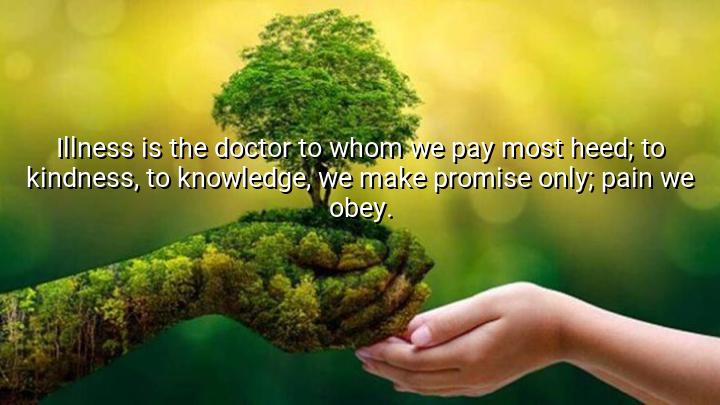




The quote "Illness is the doctor to whom we pay most heed; to kindness, to knowledge, we make promise only; pain we obey." by Marcel Proust highlights the powerful role of suffering and pain in shaping human behavior. Proust suggests that while we may admire or acknowledge kindness and knowledge, we often fail to act upon them consistently. However, when illness strikes, the immediate presence of pain forces us to change our habits, priorities, and actions in ways we might otherwise ignore.
The meaning of this quote is rooted in the contrast between voluntary learning and involuntary experience. People often make promises to embrace wisdom or kindness, but those commitments can remain abstract until pain makes them unavoidable. Illness, unlike advice or gentle encouragement, compels obedience because it demands attention to survival and well-being. In this way, Proust underscores the profound authority that suffering holds over human life.
The origin of this idea is deeply tied to Proust’s own experiences. The French novelist struggled with chronic illness, including asthma and other health issues, throughout his life. His reflections on suffering often made their way into his philosophical and literary works, particularly in In Search of Lost Time. For him, illness was not only a physical struggle but also a profound teacher that shaped his perspective on life, art, and human fragility.
Ultimately, the quote reminds us that while we may neglect the lessons of kindness and knowledge, we cannot ignore the lessons of pain. It becomes the most effective, albeit harsh, teacher—one that commands obedience and forces us to confront our vulnerabilities and reassess our values.

AAdministratorAdministrator
Welcome, honored guests. Please leave a comment, we will respond soon