

We always hear from newspapers that while people understand the environmental challenge, they are unwilling to stomach the solutions. The trouble is, we only ever hear about the solutions from the media, and for whatever reason, they are almost always caricatured beyond recognition. If there's no appetite for green, it's not surprising.
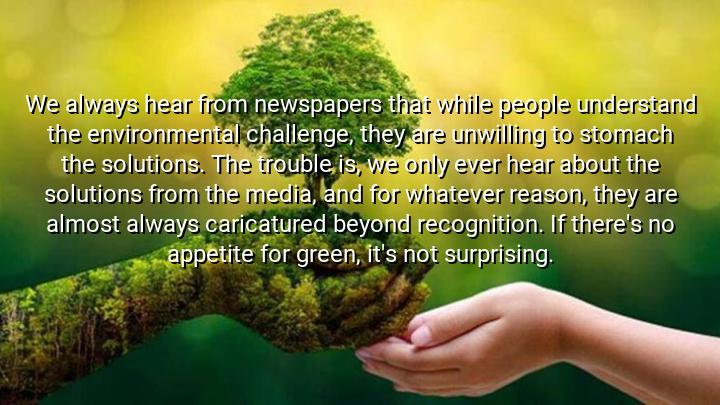




The quote, "We always hear from newspapers that while people understand the environmental challenge, they are unwilling to stomach the solutions. The trouble is, we only ever hear about the solutions from the media, and for whatever reason, they are almost always caricatured beyond recognition. If there's no appetite for green, it's not surprising," comes from Zac Goldsmith, a British environmentalist, journalist, and former Member of Parliament. Goldsmith has been a vocal advocate for environmental policy and sustainable practices, often highlighting the gap between public awareness and policy implementation.
At its core, the quote critiques the role of media in shaping public perception of environmental solutions. Goldsmith argues that while people may understand the urgency of environmental challenges, the solutions are frequently misrepresented, oversimplified, or caricatured in news coverage. This distortion can create the false impression that green policies are extreme, impractical, or unpopular, undermining genuine public support for sustainability initiatives.
The origin of the quote reflects Goldsmith’s broader concern with environmental communication and policy advocacy. He emphasizes that the way solutions are framed and reported heavily influences public perception and acceptance. By pointing out the discrepancy between awareness and appetite for action, he underscores the importance of accurate and nuanced reporting in building support for effective environmental policies.
In summary, this quote serves as both a critique and a call to clarity. Goldsmith reminds readers that public hesitation toward green solutions is often shaped by misrepresentation rather than genuine resistance. He highlights the need for honest communication, better media framing, and more informed public discourse to bridge the gap between understanding environmental challenges and embracing their solutions.

AAdministratorAdministrator
Welcome, honored guests. Please leave a comment, we will respond soon