

We all pay for life with death, so everything in between should be free.
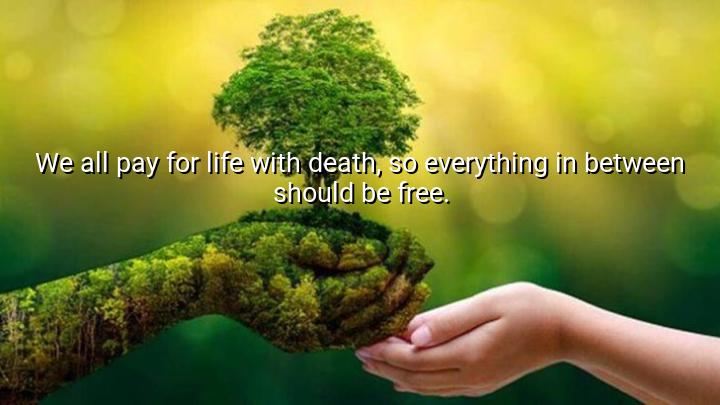




Bill Hicks' quote, "We all pay for life with death, so everything in between should be free," offers a philosophical perspective on the inevitable nature of mortality and the transient nature of human existence. Hicks suggests that because death is a guaranteed part of life, it is a price we must all pay for the gift of being alive. By framing life as something we "pay" for with death, he highlights the impermanence of our existence and emphasizes the unavoidable nature of death as the ultimate cost.
The second part of the quote, "everything in between should be free," challenges the societal norms surrounding materialism and capitalism. Hicks is commenting on the human tendency to place a price on almost every aspect of life, from goods and services to experiences and relationships. He advocates for a life where the intrinsic joy and freedom of living are not constrained by economic systems or the pressure to accumulate wealth. The idea of "everything in between" being free suggests that the moments and experiences that make up life should not be commodified or treated as transactions.
This quote reflects Hicks' broader view on life and society. As a stand-up comedian known for his satirical and often critical humor, Hicks often used his platform to address social issues like consumerism, authority, and the meaning of life. The quote embodies his belief that true fulfillment and happiness in life should not be about accumulating material wealth but about enjoying the experiences and relationships that make life rich and meaningful.
The origin of this quote comes from Bill Hicks, an American comedian whose work often explored deep, existential topics with sharp humor and criticism of societal norms. Known for his controversial and thought-provoking performances, Hicks used his comedy to challenge his audience’s views on life, death, and societal expectations. This particular quote is a reflection of his countercultural approach, urging people to question the value they place on material possessions and to recognize the value of life’s intangible experiences.

AAdministratorAdministrator
Welcome, honored guests. Please leave a comment, we will respond soon