

Virtues, like viruses, have their seasons of contagion. When catastrophe strikes, generosity spikes like a fever. Courage spreads in the face of tyranny.
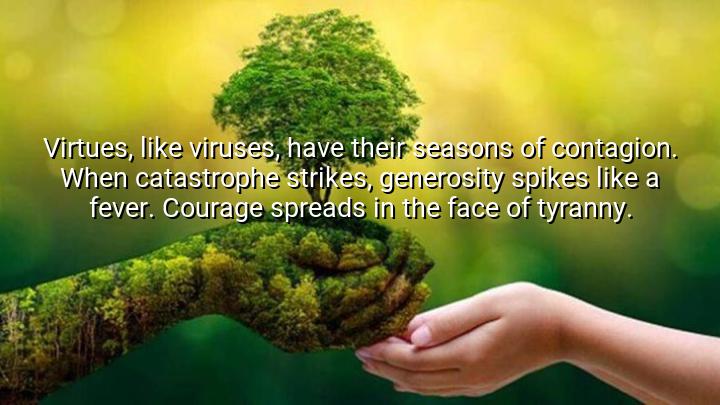




In this quote, Nancy Gibbs compares virtues to viruses, suggesting that they, too, can spread in a way that is almost contagious. She explains that, just like certain diseases have peak seasons, virtues such as generosity and courage emerge more prominently during times of crisis. In other words, the circumstances we face, particularly catastrophes or moments of extreme challenge, can bring out these virtues in individuals, causing them to spread rapidly and influence others.
Gibbs uses the metaphor of generosity spiking like a fever to describe how people often become more compassionate and selfless in the face of adversity. When catastrophe strikes, there is a tendency for individuals to step up and offer help, even at personal cost. This surge in generosity reflects how, in desperate times, people may feel more compelled to contribute to the well-being of others, fostering a sense of solidarity and collective action.
The mention of courage spreading in the face of tyranny further illustrates the idea that during times of oppression or tyranny, people tend to become more courageous, uniting to stand against injustice. Just like a virus that rapidly spreads through a population, courage becomes contagious as people draw strength from one another. This highlights the powerful human instinct to resist and fight back when faced with unfairness or suffering.
Ultimately, Gibbs’ quote reflects the idea that virtues are not static but can emerge and amplify during times of crisis. It suggests that human nature has an inherent ability to rise to the occasion, with virtues like generosity and courage spreading like an infectious force when they are most needed.

AAdministratorAdministrator
Welcome, honored guests. Please leave a comment, we will respond soon