

Usually, environmental programs are not designed for a mainstream audience.
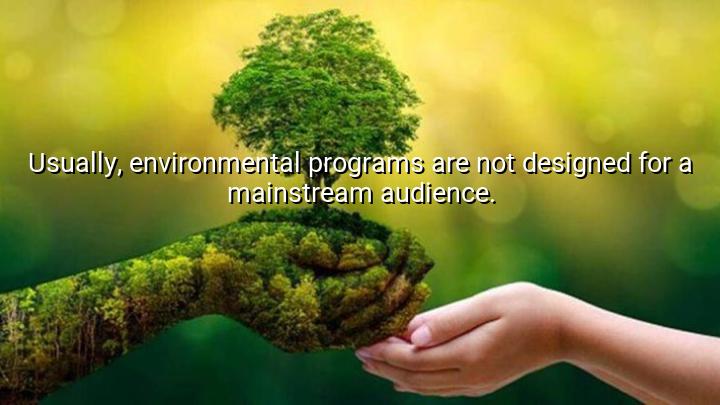




The quote, "Usually, environmental programs are not designed for a mainstream audience," comes from Paul Watson, a Canadian environmentalist, marine conservation activist, and founder of the Sea Shepherd Conservation Society. Watson is widely known for his direct-action campaigns to protect marine life and combat illegal whaling, overfishing, and environmental destruction. This quote reflects his observation about the way environmental messaging is often structured and the audiences it targets.
At its core, Watson is highlighting that many environmental programs are created with specialized or niche audiences in mind, such as scientists, activists, or policy makers, rather than the general public. As a result, their language, format, or focus may not resonate with mainstream audiences, limiting their broader impact and accessibility. This can hinder widespread understanding and engagement with critical environmental issues.
The origin of the quote reflects Watson’s experience in both activism and advocacy, where reaching a large audience is essential for building public support for environmental causes. Watson’s campaigns often rely on visibility, media attention, and public engagement, and this insight underscores the importance of crafting messages that are relatable and understandable to the general population, not just experts.
In summary, this quote serves as both an observation and a critique. Watson emphasizes that for environmental programs to be effective, they must consider mainstream engagement. By tailoring messaging to reach wider audiences, activists and organizations can increase awareness, support, and action on pressing environmental issues, ultimately making conservation efforts more impactful.

AAdministratorAdministrator
Welcome, honored guests. Please leave a comment, we will respond soon