

Unable are the loved to die, for love is immortality.
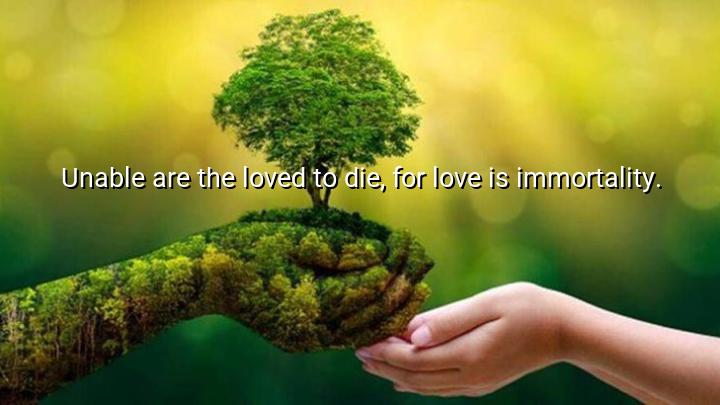




The quote “Unable are the loved to die, for love is immortality” by Emily Dickinson reflects her belief in the enduring nature of love. Dickinson suggests that those who are loved are never truly lost, because their love lives on, defying death and achieving a form of immortality. In this sense, love becomes a force that transcends time and the limitations of the human condition, outlasting physical existence and continuing in the memories and hearts of others. The loved one may die physically, but their love persists forever.
The origin of this quote comes from Emily Dickinson, one of America’s most renowned poets, known for her unique and often unconventional approach to life, death, and immortality. Her poems, though written in the 19th century, continue to resonate today because of their emotional depth and exploration of profound existential questions. Dickinson was particularly fascinated by themes of death, eternity, and the afterlife, often using love as a means to explore the possibility of spiritual immortality beyond physical death.
In the quote, Dickinson aligns love with immortality, suggesting that the emotional and spiritual connections we form with others can defy death’s finality. Love becomes a force so powerful that it transcends the temporal nature of life. The people we love, or those who love us, carry on aspects of us that never die—whether through memory, legacy, or the impact we leave on each other’s lives. This view presents love as a sacred force that endures beyond the constraints of time and mortality.
By asserting that the loved are "unable to die," Dickinson challenges the finality of death, offering a vision of eternal connection through love. It’s a hopeful notion that our deepest connections—rooted in affection and caring—have the ability to defy the conventional boundaries of life and death. This perspective is central to Dickinson’s exploration of how we find meaning and continuity beyond life’s fragility.
Let me know if you'd like a shorter version or further explanation!

AAdministratorAdministrator
Welcome, honored guests. Please leave a comment, we will respond soon