

Two persons cannot long be friends if they cannot forgive each other's little failings.
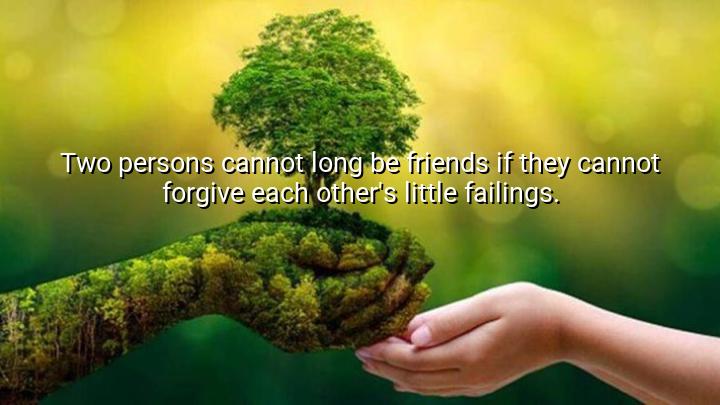




The quote "Two persons cannot long be friends if they cannot forgive each other's little failings" by Jean de la Bruyère, a French philosopher and moralist, suggests that forgiveness is essential in maintaining a lasting friendship. Bruyère implies that no one is perfect, and both parties in a friendship must be willing to overlook each other's imperfections and mistakes. Without this ability to forgive, even the smallest flaws can erode the trust and affection that form the foundation of a strong friendship.
Bruyère's words emphasize the idea that friendships are not just about shared joys and common interests but also about accepting one another's shortcomings. The failings he refers to could be minor flaws or actions that could otherwise strain the relationship. However, true friends understand that humanity involves errors and missteps, and they choose to let these minor issues slide in favor of maintaining harmony and emotional connection.
The quote also reflects Bruyère's broader views on human nature and relationships, where he believed that virtue in a friendship involves tolerance, patience, and understanding. The ability to forgive each other's flaws is a sign of maturity and a deeper connection, rather than one based solely on perfection or unrealistic expectations. This suggests that friendship thrives not by avoiding conflict, but by overcoming it with grace.
In conclusion, Jean de la Bruyère's quote underscores the importance of forgiveness in enduring friendships. A true friend is someone who accepts not only your strengths but also your weaknesses, and through this mutual acceptance, the bond between individuals can withstand the test of time. Forgiving each other's failings is a crucial aspect of building and maintaining a friendship that can endure life’s challenges.

AAdministratorAdministrator
Welcome, honored guests. Please leave a comment, we will respond soon