

There are only three events in a man's life; birth, life, and death; he is not conscious of being born, he dies in pain, and he forgets to live.
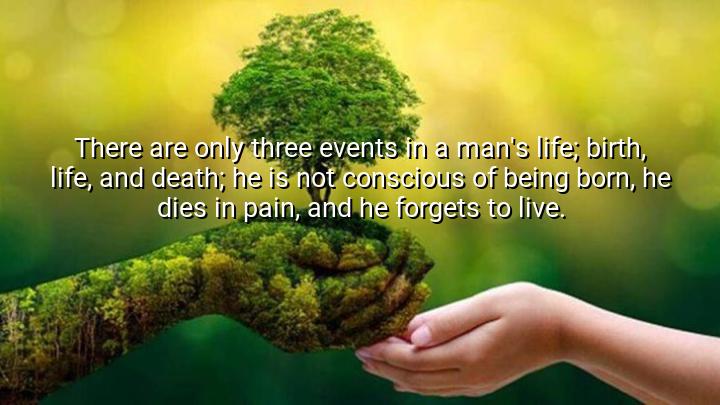




In this quote, Jean de la Bruyère presents a stark and contemplative view of the human experience. He suggests that there are only three significant events in a person’s life: birth, life, and death. However, he highlights the paradox in these events, stating that we are not conscious of being born, we experience pain at death, and, in between, we often forget to live. This reflects a deep existential insight, pointing to the impermanence and unpredictability of life.
The phrase "he is not conscious of being born" suggests that birth is an event we have no control over and that we are unaware of the beginning of our existence. The second event, death, is marked by pain, emphasizing the suffering often associated with the end of life, a reality that is unavoidable for most. Finally, the idea that we "forget to live" implies that, despite being granted a full life, many people fail to live with awareness or purpose, consumed by daily routines, distractions, or existential concerns, rather than appreciating or fully engaging with life.
La Bruyère’s words encourage reflection on the fleeting nature of existence. He critiques how people often focus on the extremes—birth and death—without truly appreciating the middle period of life, where real meaning and fulfillment are found. His observation serves as a reminder to be more mindful of our existence, to embrace life, and to not take it for granted, recognizing that we cannot change how we are born or how we die, but we can influence how we choose to live.
Originating from Jean de la Bruyère, a French philosopher and moralist known for his reflections on society and human nature, this quote reflects his cynicism and deep concern with how individuals engage with their own lives. La Bruyère's writings often explored themes of personal reflection, the transitory nature of life, and the superficiality of social pursuits. Through this quote, he calls attention to the importance of living consciously and with purpose, in a way that transcends mere existence.

AAdministratorAdministrator
Welcome, honored guests. Please leave a comment, we will respond soon