

True humility is intelligent self respect which keeps us from thinking too highly or too meanly of ourselves. It makes us modest by reminding us how far we have come short of what we can be.
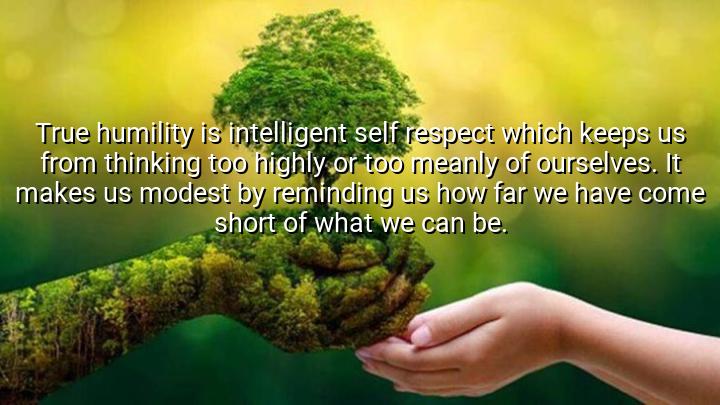




Ralph W. Sockman’s quote, "True humility is intelligent self-respect which keeps us from thinking too highly or too meanly of ourselves. It makes us modest by reminding us how far we have come short of what we can be," explores the idea that humility is not about self-deprecation or false modesty, but rather about a balanced sense of self-respect. Sockman suggests that true humility involves an awareness of both our potential and our limitations, helping us avoid the extremes of arrogance or self-doubt. It encourages a modest view of oneself, acknowledging both accomplishments and the recognition that there is always room for growth.
Sockman’s use of the phrase "intelligent self-respect" suggests that humility is not a passive state, but an active and thoughtful one. It requires a deeper understanding of who we are and how we fit into the larger picture of life. This kind of humility does not lead to false modesty, where we minimize our value, nor does it push us toward pride, where we inflate our sense of worth. Instead, it creates a space for growth and reflection, reminding us that our journey is about continuous self-improvement.
The idea that humility "reminds us how far we have come short of what we can be" reflects Sockman’s belief that true humility is also tied to aspiration. It is not about denying our strengths, but about recognizing that our potential is not yet fully realized. This aspect of humility encourages progress, suggesting that we should always be striving to improve ourselves and be better versions of who we are, without becoming complacent or self-satisfied.
Sockman’s quote reflects a broader philosophy of personal development. He advocates for a humble yet confident self-awareness that allows individuals to stay grounded while continuously striving toward their highest potential. This kind of humility is not about judging ourselves harshly, but about keeping a realistic and honest perspective on who we are and what we can achieve.

AAdministratorAdministrator
Welcome, honored guests. Please leave a comment, we will respond soon