

Trauma causes us to have an internal experience that is frightening, angry, and shameful. When we feel threatened, as we do when we are traumatized, our entire organism is geared up to find the source of that threat and to do something about it.
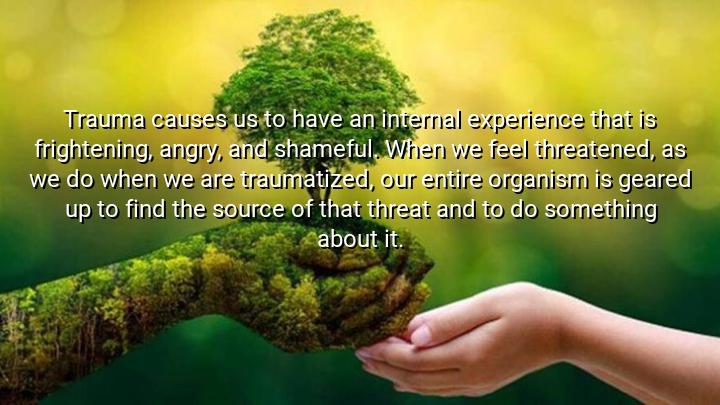




The quote "Trauma causes us to have an internal experience that is frightening, angry, and shameful. When we feel threatened, as we do when we are traumatized, our entire organism is geared up to find the source of that threat and to do something about it." by Peter A. Levine highlights the profound emotional and physical impact of trauma on the human psyche and body. Levine, a leading figure in the field of trauma therapy, suggests that trauma not only causes intense emotional responses like fear, anger, and shame, but also triggers an instinctual physiological response designed to protect us from harm. This internal turmoil is a direct result of the body’s attempt to process and respond to a perceived threat.
Levine emphasizes that when we experience trauma, our entire organism—both mind and body—becomes activated in an attempt to identify and neutralize the danger. This reaction is part of the body's survival mechanism, often referred to as the fight-or-flight response, which is meant to prepare us to take action in the face of danger. However, in the case of trauma, these responses may become disrupted or stuck, leading to long-term emotional and physical consequences, such as anxiety or PTSD, if not addressed.
The emotional states of being frightened, angry, and shameful during trauma are the natural outcomes of this heightened alertness. Fear signals danger, anger emerges as a potential defense mechanism, and shame often arises when we feel vulnerable or powerless in the face of the trauma. These complex emotions create an internal experience that can overwhelm a person, making it difficult to function normally or feel safe in their environment.
Ultimately, Peter A. Levine’s quote underscores the intense psychological and physiological effects of trauma. It highlights how the body and mind are inextricably linked in the process of dealing with threat, and how unresolved trauma can keep the individual in a constant state of heightened alertness. Levine's work focuses on understanding these responses and helping individuals process and release the trapped energy associated with traumatic experiences, so they can find healing and restore balance to their bodies and minds.

AAdministratorAdministrator
Welcome, honored guests. Please leave a comment, we will respond soon