

To say yes, you have to sweat and roll up your sleeves and plunge both hands into life up to the elbows. It is easy to say no, even if saying no means death.
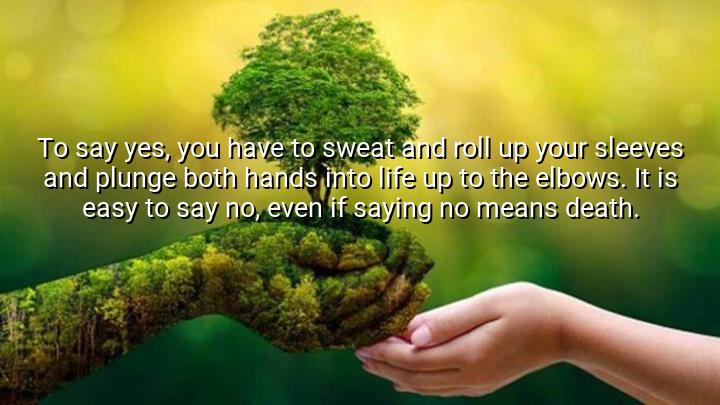




Jean Anouilh’s quote, "To say yes, you have to sweat and roll up your sleeves and plunge both hands into life up to the elbows. It is easy to say no, even if saying no means death," speaks to the commitment and effort required to embrace life fully. Saying yes to life means actively engaging with all its challenges and opportunities, requiring hard work, perseverance, and a willingness to dive into the messiness of existence. It implies that embracing life’s complexities is a conscious choice that demands action, unlike the simple act of saying no, which is an avoidance of responsibility and engagement.
The quote contrasts the difficulty of choosing to actively participate in life with the ease of withdrawing from it. Saying no is the path of least resistance—it can signify choosing safety or comfort, or even giving up on life itself. Anouilh suggests that while saying no might protect one from facing life’s difficulties, it also prevents one from experiencing the richness and rewards that come from engagement and action. The easy way out might avoid hardship, but it also avoids growth, fulfillment, and the vibrancy that life offers.
Anouilh's words also reflect a philosophical view on personal responsibility. To say yes is to take ownership of one's fate, to shape one’s own destiny through active choice and effort. The contrast with no reveals a deeper truth about human nature—the fear of engagement can lead to stagnation or death, not necessarily physical, but a metaphorical death of the spirit or potential. The message is clear: real life happens when we roll up our sleeves, take risks, and dive headfirst into our experiences, despite their difficulties.
The origin of this quote comes from Jean Anouilh, a French playwright known for his works that explore themes of human nature, freedom, and existential choice. His plays, such as Antigone and The Lark, often delve into the struggle between individual will and societal constraints. This quote reflects Anouilh’s view on the human condition—the importance of making active choices, even when those choices involve hardship, rather than retreating into the safety of saying no to life.

AAdministratorAdministrator
Welcome, honored guests. Please leave a comment, we will respond soon