

To make no mistakes is not in the power of man; but from their errors and mistakes the wise and good learn wisdom for the future.
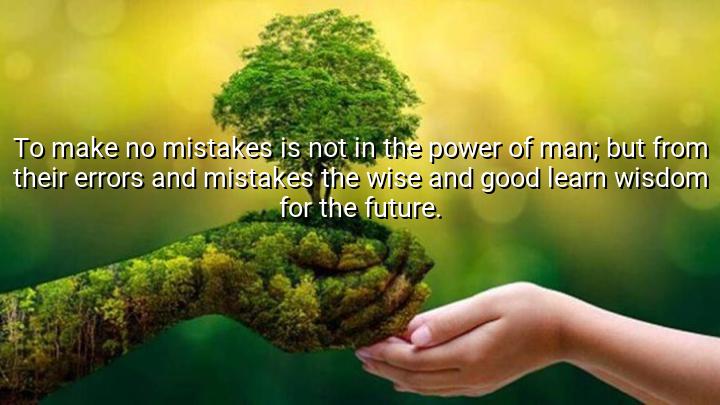




The quote "To make no mistakes is not in the power of man; but from their errors and mistakes the wise and good learn wisdom for the future" is attributed to Plutarch, an ancient Greek philosopher, historian, and biographer. The central theme of this quote reflects on the human condition and the inevitable nature of mistakes. It emphasizes that perfection is not achievable for any individual, as errors are an inherent part of the human experience.
Plutarch highlights that wisdom and growth come not from avoiding mistakes entirely, but from learning and evolving through them. This view aligns with the ancient Greek belief that personal growth often stems from adversity and self-reflection. In this sense, the quote encourages individuals to view their mistakes not as failures, but as opportunities for self-improvement and learning.
The essence of the quote also stresses the importance of humility. It suggests that only those who possess wisdom—the ability to reflect and adapt—can truly benefit from their mistakes. By embracing the lessons learned through errors, the wise are able to make better decisions and move forward more effectively in the future.
Ultimately, this quote from Plutarch serves as a reminder that perfection is unattainable, but wisdom and growth come from embracing our mistakes and using them as stepping stones toward a better, more enlightened future.

AAdministratorAdministrator
Welcome, honored guests. Please leave a comment, we will respond soon