

The mind is not a vessel to be filled but a fire to be kindled.
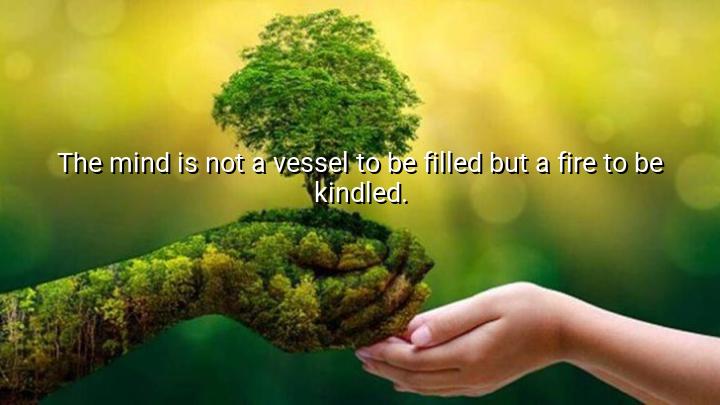




The quote "The mind is not a vessel to be filled but a fire to be kindled" by Plutarch emphasizes the idea that learning is not just about absorbing information, but about sparking curiosity and critical thinking. Plutarch, an ancient Greek philosopher and historian, contrasts the mind with a passive vessel that can be filled, suggesting instead that it should be seen as an active force, like a fire, that requires nurturing, stimulation, and passion to grow. Rather than simply storing facts, the mind should be engaged and inspired, fueling intellectual and personal growth.
Plutarch’s quote underscores the importance of active learning and engagement. Just as a fire needs to be fed and stoked, the mind requires motivation, creativity, and stimulation to develop its full potential. The idea is that education should not just focus on rote memorization or passive intake of information, but should encourage students to think critically, ask questions, and foster their natural curiosity. This active process of engaging with ideas leads to deeper understanding and personal transformation.
The origin of this quote reflects Plutarch’s belief in the value of philosophy and wisdom as tools for self-improvement. He often wrote about the importance of cultivating virtuous behavior and thoughtful reflection. His philosophy emphasized that knowledge should be transformative, not merely instrumental. By likening the mind to a fire, he highlights the dynamic nature of learning and intellectual development, suggesting that real growth occurs when individuals actively seek to understand the world around them.
Ultimately, this quote encourages us to view the mind as something that needs to be nurtured and continually inspired. It’s not enough to simply fill our minds with facts and information; we must foster a love for learning, curiosity, and the pursuit of deeper knowledge. Just as a fire needs kindling to burn brightly, the mind requires engagement and inspiration to truly thrive.

AAdministratorAdministrator
Welcome, honored guests. Please leave a comment, we will respond soon