

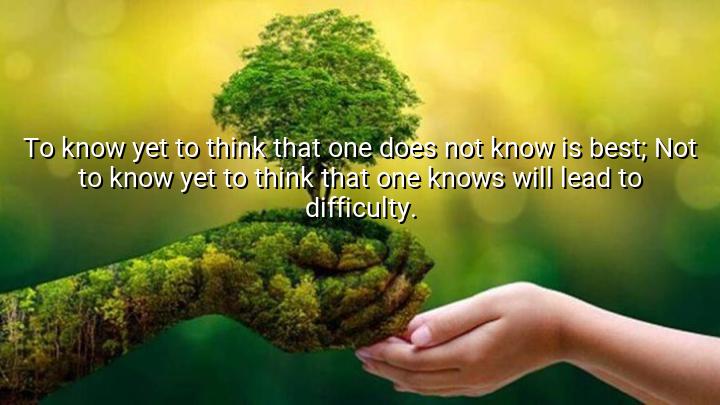
To know yet to think that one does not know is best; Not to know yet to think that one knows will lead to difficulty.




Certainly! Here’s a short explanation with bolded keywords related to the quote by Lao Tzu:
The quote emphasizes the value of humility and self-awareness in the pursuit of knowledge. Lao Tzu suggests that truly knowing something while remaining aware of the limits of that knowledge—thinking that you do not know—is the best attitude to have. This mindset encourages openness to learning and prevents arrogance, fostering wisdom through continuous growth.
Conversely, Lao Tzu warns that not knowing yet believing you know leads to difficulty. This overconfidence or ignorance can cause mistakes, misunderstandings, and unnecessary problems. It reflects the dangers of false certainty and the importance of being honest about what we do and do not understand.
The origin of this quote is Lao Tzu, the ancient Chinese philosopher and founder of Taoism, whose teachings focus on living in harmony with the Tao, or the natural way of the universe. His wisdom often centers on balance, humility, and the importance of recognizing the limits of human knowledge.
In summary, the quote teaches the importance of intellectual humility and cautious self-reflection. It reminds us that true wisdom lies in acknowledging what we don’t know and remaining open to learning, while warning against the pitfalls of overestimating our understanding.

AAdministratorAdministrator
Welcome, honored guests. Please leave a comment, we will respond soon